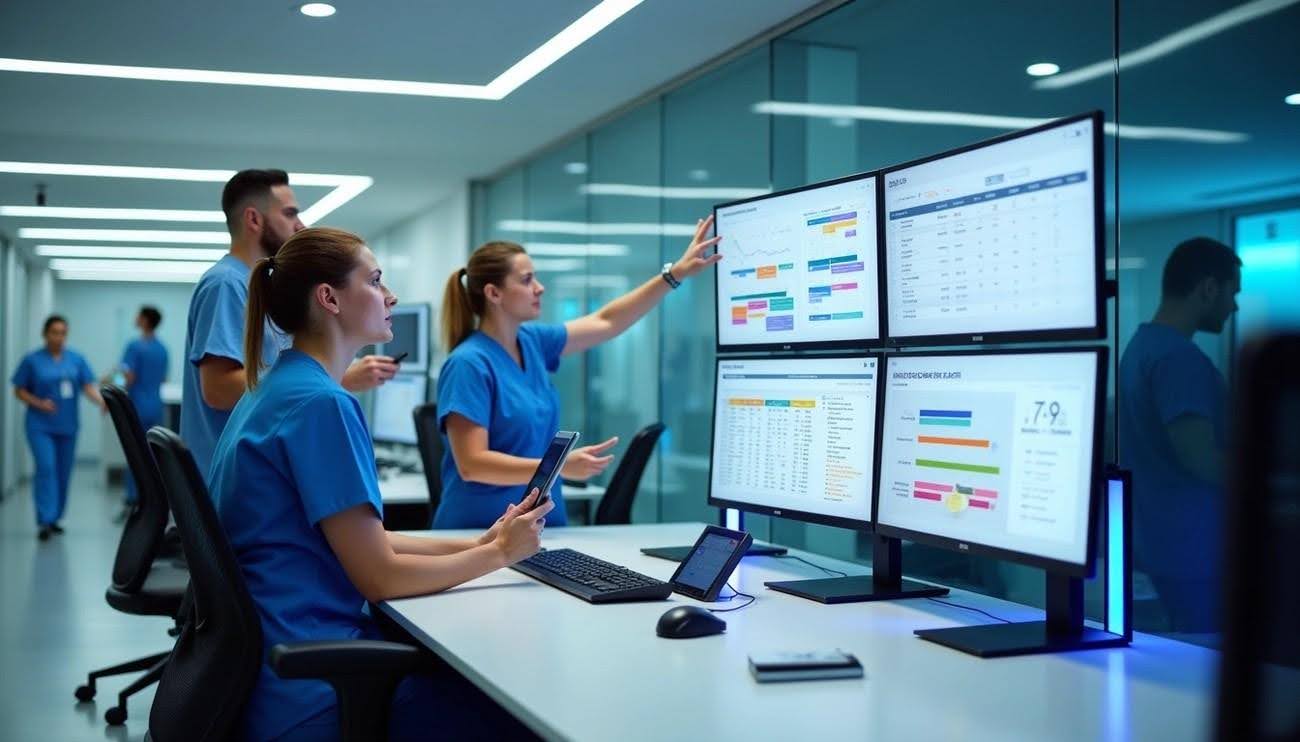
Healthcare costs are climbing faster than they have in ten years, and hospitals can no longer view AI as an optional upgrade. The technology has become essential to clinical efficiency, marking a defining moment for the healthcare sector.
At the same time, the industry is bracing for a severe staffing shortage, with an estimated 3.2 million workers needed in the coming years. Traditional management strategies are struggling to meet this demand. Many healthcare systems are turning to AI-driven solutions to bridge the gap. For instance, Ardent Health Services reported $2.5 million in additional revenue in just one year after adopting an AI-powered staffing platform.
These innovations go far beyond automating paperwork. AI tools now assist in diagnosing diseases, predicting patient outcomes, and strengthening patient care through virtual assistance and remote monitoring.
This article explores how modern workforce management technology enhances clinical operations, reduces staff burnout, and supports sustainable staffing strategies. It reveals how the right tech solutions can help healthcare organizations thrive even amid mounting challenges.
Related Articles
-
 Mental Health in the Workplace: Legal Obligations and Best Practi…
-
What Legal Obligations Do Courier Services Have? 8 Things to Know
-
How to Implement AI Tools to Enhance Workplace Productivity
-
Mastering the Clock: Unlocking Successful Time Management in Recr…
-
Employee Engagement: The Heart of Effective Human Resource Manage…
-
Collaborative Culture: Fostering Productivity through Strong Empl…
-
What to Do If Your Employer Ignores Workplace Safety Standards


Understanding Workforce Challenges in Clinical Settings

Image Source: uPerform
Clinical operations face unmatched workforce challenges that directly affect patient care. The U.S. healthcare system will likely face a shortage of 3.2 million healthcare workers by 2026. This creates a perfect storm of operational problems.
Staffing shortages and burnout
A shortage of up to 122,000 physicians by 2032 looms ahead, according to the Association of American Medical Colleges. The nursing sector just needs 200,000 new nurses each year. The healthcare demographics paint a worrying picture – more than half of registered nurses are over 50 years old. This signals a big experience gap as retirement rates speed up.
Burnout has hit crisis levels. About 40% of physicians and up to 49% of nurses reported burnout symptoms in 2022. A newer study shows that 55% of front-line healthcare workers feel burned out, up from 30-50% before the pandemic. This is a big deal as it means that between 30-60% of new nursing graduates leave the profession completely.
Several factors play a role here: administrative burdens, lack of scheduling control, and heavy workloads. Staff working more than 60 hours weekly show burnout rates above 50%.
Inefficient scheduling systems
Old scheduling systems drain $150 billion annually from the U.S. healthcare system through missed appointments alone. Bad appointment scheduling creates a domino effect – patients wait longer, staff get frustrated, and operations become less efficient.
Research shows that poor scheduling drives patients away. About 30% of patients leave healthcare facilities because they wait too long. Yes, it is worth noting that 84% of patients see wait times as vital to their healthcare experience.
Poor scheduling leads to high staff turnover, which costs 1.5 times an employee’s salary to replace. Healthcare administrators must balance accountability with fewer workers and more complex patient needs.
Bad patient scheduling hits revenue management through missed appointments, administrative problems, and lost income opportunities. Without combined scheduling systems, staff spend precious time managing calendars instead of caring for patients.
How Technology Streamlines Clinical Operations
Technology plays a vital role in solving workforce challenges within healthcare facilities. By automating repetitive tasks and improving communication, modern tools allow healthcare professionals to dedicate more time to patient care and less to paperwork. These innovations enhance operational efficiency, reduce burnout, and improve patient outcomes.
Here are the key ways technology streamlines clinical operations:
- Automated shift scheduling and time tracking – Modern scheduling software replaces outdated manual systems, providing real-time updates, precise time tracking, and automated schedule creation. These tools prevent conflicts, alert managers when staff approach overtime limits, and allow qualified employees to pick up open shifts. GPS verification ensures accurate clock-ins at the right locations.
- Reducing manual administrative tasks – Administrative work remains one of the biggest sources of physician burnout. Studies show that 57 percent of physicians believe AI automation is key to addressing workforce shortages. Health systems like Geisinger use over 100 active automations to manage admissions and cancellations, while The Permanente Medical Group saves physicians roughly an hour each day through AI-powered medical scribes.
- Improving communication between departments – As healthcare grows more complex, effective communication has become essential for patient safety. Modern communication platforms connect departments seamlessly, enabling quick information sharing and consistent protocols. These tools reduce miscommunication, improve coordination, and create smoother workflows that directly enhance patient care.
Flexible Staffing Models in Modern Healthcare
Healthcare organizations have made flexible staffing models a crucial strategy to maintain quality care while dealing with ongoing staffing challenges. These flexible methods help facilities handle changing patient loads and give healthcare professionals the work-life balance they value.
Healthcare providers use different flexible models to get the best from their workforce. Cross-trained professionals form internal float pools that act like rapid response teams. These teams move between departments based on needs without depending on external agencies. Per diem staffing provides clinical support when staff members are absent or patient numbers unexpectedly rise.
Contract staffing helps manage seasonal increases and specialized projects, while temporary staff fill immediate short-term gaps. The results speak for themselves: hospitals report 20% higher nurse staffing levels and 94% shift fill rates after switching to flexible models.
These benefits go beyond just running things better. Research shows flexible work arrangements boost job satisfaction (r = 0.520, p < .01) and life satisfaction (r = 0.487, p < .01) among healthcare workers. Organizations that use detailed flexible staffing models save money by cutting overtime costs and reducing expensive last-minute agency staff.
Using Data and AI to Optimize Workforce Management
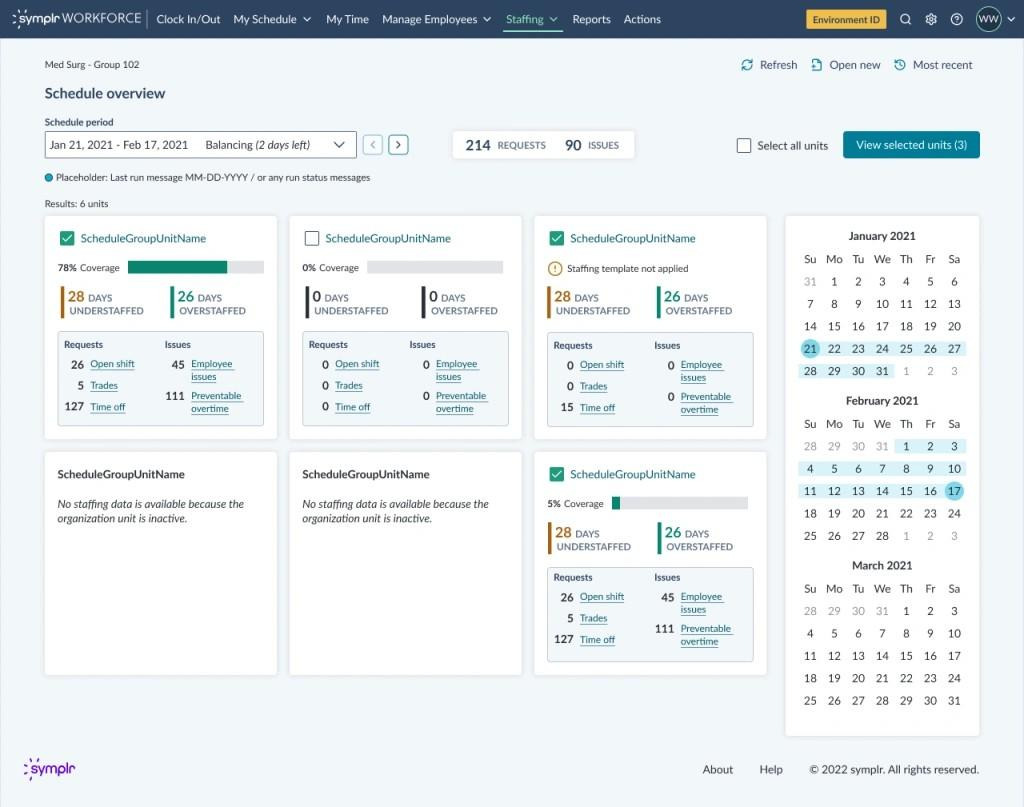
Image Source: symplr
Data and artificial intelligence have transformed how healthcare facilities manage staff and resources. Hospitals now rely on advanced analytics to improve scheduling, control costs, and enhance patient outcomes. These technologies allow leaders to make proactive decisions rather than react to staffing challenges.
Here’s how data and AI are driving smarter workforce management:
- Immediate analytics for staffing decisions – Hospitals use real-time analytics to forecast staff requirements based on current capacity and historical data. Mission Control Centers analyze patient flow and bed availability to predict staffing needs for the next 24 hours, ensuring teams are ready before demand peaks.
- Predictive scheduling powered by AI – Intelligent algorithms forecast patient volumes with high precision. Predictive models in emergency departments have been shown to cut staffing costs by 10 to 15 percent while maintaining care quality. These systems evaluate shift history, patient severity, and even weather data to create more balanced schedules and fill open shifts efficiently.
- Tracking labor costs and overtime trends – Labor accounts for about 60 percent of hospital expenses. Advanced analytics platforms help leaders monitor overtime, evaluate productivity, and manage costs across departments. These insights ensure resources are distributed fairly and budgets remain under control.
- Identifying workforce gaps before they occur – Predictive analytics highlight potential shortages in advance. The technology compares real-time data with historical patterns to forecast demand changes, allowing managers to adjust schedules proactively and prevent staffing imbalances.
Implementing Tech Solutions Successfully
Organizations need more than just software purchases to implement workforce technology successfully. The core team must create a plan to blend new systems with current workflows for the best results.
Choosing the right platform for your needs
A full picture of your current processes should come first. You need to understand your existing workflows and team structure before looking into AI solutions. Note that solutions work best when they match your facility’s specific needs and resources.
No single solution fits every hospital. Your assessment should include the platform’s reputation, track record, service options, budget-friendly features, compliance tools, and tech efficiency. Above all, any technology should reduce clinical staff’s workload, not increase it.
Training staff and ensuring adoption
The most advanced AI system becomes useless without staff buy-in. Units that adopt change management practices show better results consistently. Texas Children’s Hospital shows this perfectly—they picked team members from different departments to connect technical and clinical staff. These champions helped translate complex concepts into practical guidelines their colleagues could use.
Successful training approaches include:
- Testing based on roles before launch to verify systems work right for each group
- Running real-world practice sessions before the actual rollout
- Creating individual-specific feedback, like Kaiser Permanente’s approach of showing nurses their EHR usage alongside patient numbers
The implementation process should prioritize building trust, offering support, and sharing clear messages about how new tools help everyone.
The Future of a Smarter, Stronger Healthcare Workforce
Technology has redefined what it means to manage healthcare teams efficiently. It empowers professionals to focus on what truly matters—patient care—while removing the obstacles that once slowed them down. Hospitals that embrace digital solutions are not only improving scheduling and reducing burnout, they are reshaping the way healthcare systems operate.
The growing role of AI, flexible staffing models, and data-driven insights marks a shift toward a more responsive and sustainable future. These innovations help healthcare leaders anticipate needs, make confident staffing decisions, and create environments where both patients and staff thrive.
Real progress in healthcare does not come through short-term fixes but through systems that adapt, learn, and support human potential. As hospitals continue to evolve, those that integrate intelligent workforce management tools will stand at the forefront of better care, higher efficiency, and a healthier workforce for years to come.