
Legal operations have hit a turning point in 2025. Technology implementation leads the priority list for 54% of professionals. The numbers tell an interesting story – six out of ten corporate legal departments employ at least one legal operations professional. Another 40% plan to add more legal ops staff this year.
Industry surveys confirm that legal technology gives companies a competitive edge in today’s ever-changing business world. Legal operations management has proven its worth by turning departments from cost centers into strategic business partners. A company’s contract review process adds 6.5 days to product launches, which leads to $7 million in yearly revenue losses. The right technology can eliminate this problem.
Tech experts have become crucial for legal operations in 2025. This piece explores their essential skills and shows how technology tools can revolutionize your legal department. The right combination of people, processes, and technology helps teams move from solving problems to guiding business decisions.
Related Articles


Why Legal Ops Teams Need Tech Experts in 2025
The corporate legal world has changed dramatically, creating an immediate need for specialized tech expertise in legal operations teams.
Legal departments are under pressure to do more with less
Corporate legal departments face a tough reality in 2025. They must stretch their resources more than ever before. Research shows 56% of legal departments lack adequate resources, while 79% deal with growing workloads. The situation becomes more challenging as 55% work with flat or shrinking budgets, and 51% see no increase in their tech spending.
This resource shortage creates serious problems. Teams face bigger workloads and rising employee burnout. Legal teams struggle to manage risks or implement new tech solutions that could reduce these pressures.
Industry data explains that 80% of in-house attorneys feel burned out, and 60% look for new jobs. The current situation cannot continue.
Tech experts help bridge the gap between law and innovation
Tech experts have become a great way to get better legal operations management. Legal technologists act as agents of change who combine legal knowledge with tech skills. They play a vital role in advising both clients and lawyers about using legal technology effectively.
This change is happening now—82% of legal departments employ specialists in legal operations. These dedicated roles perform better than general counsel-managed functions when it comes to adopting technology, analyzing data, and working with alternative providers.
Companies leveraging solutions like Aseva can see measurable improvements in efficiency, compliance, and workflow automation, making legal operations truly strategic.
Budget limits haven’t stopped progress, as 73% of legal departments plan to use advanced technology to automate tasks and cut costs. Yet without dedicated tech experts, these projects often fail to succeed, with 45% of departments moving slowly in their tech advancement.
Tech experts do more than just improve efficiency—they turn legal operations from cost centers into strategic business partners. They help departments use AI-powered tools for contract review, compliance monitoring, and risk management. At the same time, they create proper governance frameworks to ensure these powerful technologies work ethically and effectively.
Core Skills Every Legal Operations Tech Expert Should Have
Tech experts in legal departments need a unique mix of skills that combine legal knowledge with tech expertise to succeed.
Understanding legal workflows and automation
Legal operations tech experts excel when they spot processes that need automation. They look at current workflows and find bottlenecks to design systems that help attorneys avoid repetitive tasks. Legal departments spend 40% of their time on administrative or manual tasks. This creates many chances to improve efficiency. Tech experts should know both the legal work and the tools that can make it better.
Data analysis and performance tracking
Tech experts must turn raw data into useful information in today’s evidence-based world. While 84% of legal operations professionals work with data analytics, only 43% consider their skills advanced. This skill gap needs attention. Good tech experts group legal analytics into four levels that grow in complexity: descriptive (what happened), diagnostic (why it happened), predictive (what will happen), and prescriptive (what to do). They watch vital metrics like matter volume, response times, and outside counsel performance to show legal’s value to business.
Communication and cross-functional collaboration
Tech experts must bridge the gap between legal and technical languages. They need great communication skills to help non-technical attorneys understand complex ideas and explain legal needs to IT teams. Legal departments work as central hubs that handle requests from the whole company. Tech experts must work together with finance on budgets, procurement on vendor management, and sales on contracts. Their special role lets them find ways different departments can share technology.
Change management and leadership
New technology needs careful handling in legal departments that often resist change. Recent surveys show 57% of legal operations professionals worry most about adoption and change management during tech updates. Tech experts must learn to lead organizational change, especially since legal executives now head a third or more of company-wide digital changes. They need to build ownership at every level, keep communication open, and understand legal culture’s unique aspects.
How Technology Transforms Legal Operations Management

Image Source: insideAI News
Technology changes legal operations through intelligent automation that delivers measurable business value. Here’s how these advances change key areas of legal operations management:
Reducing contract review time with AI tools
AI-powered contract review solutions have cut review cycles dramatically. Legal teams report a 70-80% reduction in contract review time. Data scientists and lawyers have developed specialized algorithms that can flag risks, provide guidance, and apply precision redlines in minutes. NDAs that once took two hours can now be completed in 30 minutes.
The quickest solutions finish initial contract reviews—including redlines—within minutes. This helps teams handle high volumes smoothly. AI speeds up the process by identifying standard clauses and points out differences from templates. It suggests appropriate language based on similar agreements.
Improving compliance and risk management
Compliance technologies have grown beyond simple monitoring into sophisticated risk management systems. Organizations can now conduct detailed risk assessments, spot potential issues, and use resources more effectively with AI. Up-to-the-minute monitoring and alerts let teams take immediate corrective actions when problems occur. This prevents violations that could get pricey.
Advanced systems use data analysis to spot patterns in financial data that humans might miss. These systems excel at detecting financial crimes and predicting possible compliance breaches. Yes, it is possible for these tools to track contracts automatically for clauses related to specific regulatory requirements. They alert teams when agreements might violate regulations.
Enabling self-service legal solutions
Self-service legal technology equips clients and business users while freeing legal teams for strategic work. Client portal software uses intuitive questions that guide users to the right resources. This enables them to handle 70% of their queries on their own before needing expert help. These platforms do more than retrieve documents. Users can complete tasks like automatically inserting correct execution clauses by answering a series of questions.
Some solutions help business users find and work with legal talent in minutes instead of weeks. They use AI to match talent with specific requirements. This approach removes bottlenecks, cuts legal waste, and improves service delivery throughout the organization.
Top Tools Legal Ops Teams Should Use in 2025
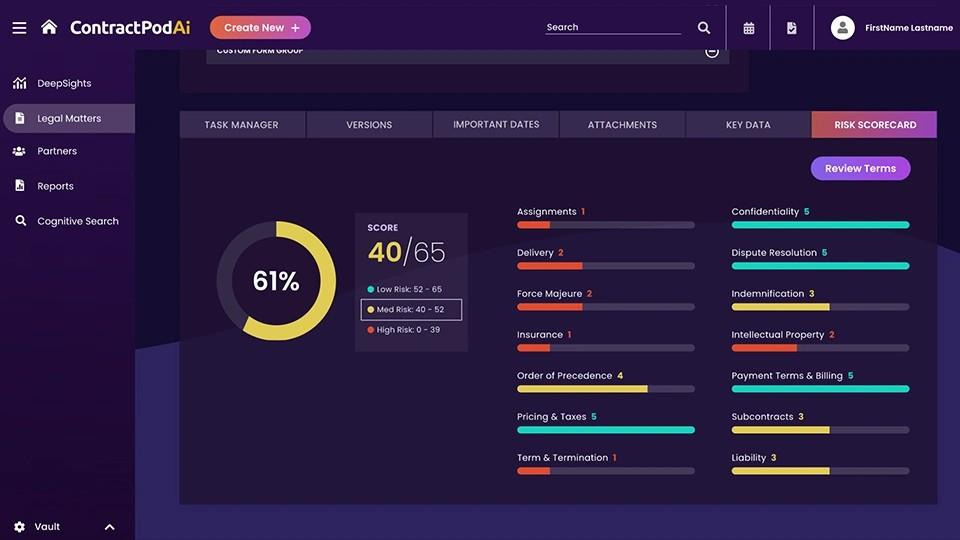
Image Source: Percipient
The right technology stack helps legal operations teams boost efficiency, accuracy, and collaboration. Here are the key tools every modern legal team should consider in 2025:
- Contract lifecycle management platforms – Solutions like Ironclad, Icertis, Sirion, and Agiloft streamline every stage of the contract process. A centralized repository minimizes manual searches and saves valuable time.
- AI-powered document review tools – Platforms such as CoCounsel Legal’s AI can review hundreds of pages in minutes, cutting review time by up to 80%. They extract key details, summarize findings, and help build strong case narratives.
eDiscovery and compliance monitoring software – Tools like ZyLAB, Everlaw, and Logikcull simplify the search and analysis of digital information. Automated compliance features ensure contracts align with evolving regulatory standards. - Time tracking and billing automation – Systems like Clio Duo suggest entries for unrecorded work, such as calls and emails. This helps law firms bill accurately while reducing administrative effort.
- Data dashboards and legal analytics – Platforms like CloudLex turn raw data into actionable insights, allowing teams to monitor productivity, revenue, and client acquisition metrics with ease.
- Collaboration and workflow automation tools – Software like HighQ and MyLegalSoftware enable secure document sharing and automated workflows, helping legal professionals focus more on strategic client work rather than manual tasks.
Conclusion
Legal operations in 2025 are defined by the smart integration of people, processes, and technology. Tech experts play a critical role, helping departments automate workflows, leverage AI, and turn data into actionable insights.
By embracing these innovations, legal teams move beyond routine tasks to become strategic business partners, driving efficiency, reducing risk, and creating measurable value for the organization. The departments that adapt fastest will set the standard for the future of legal operations.