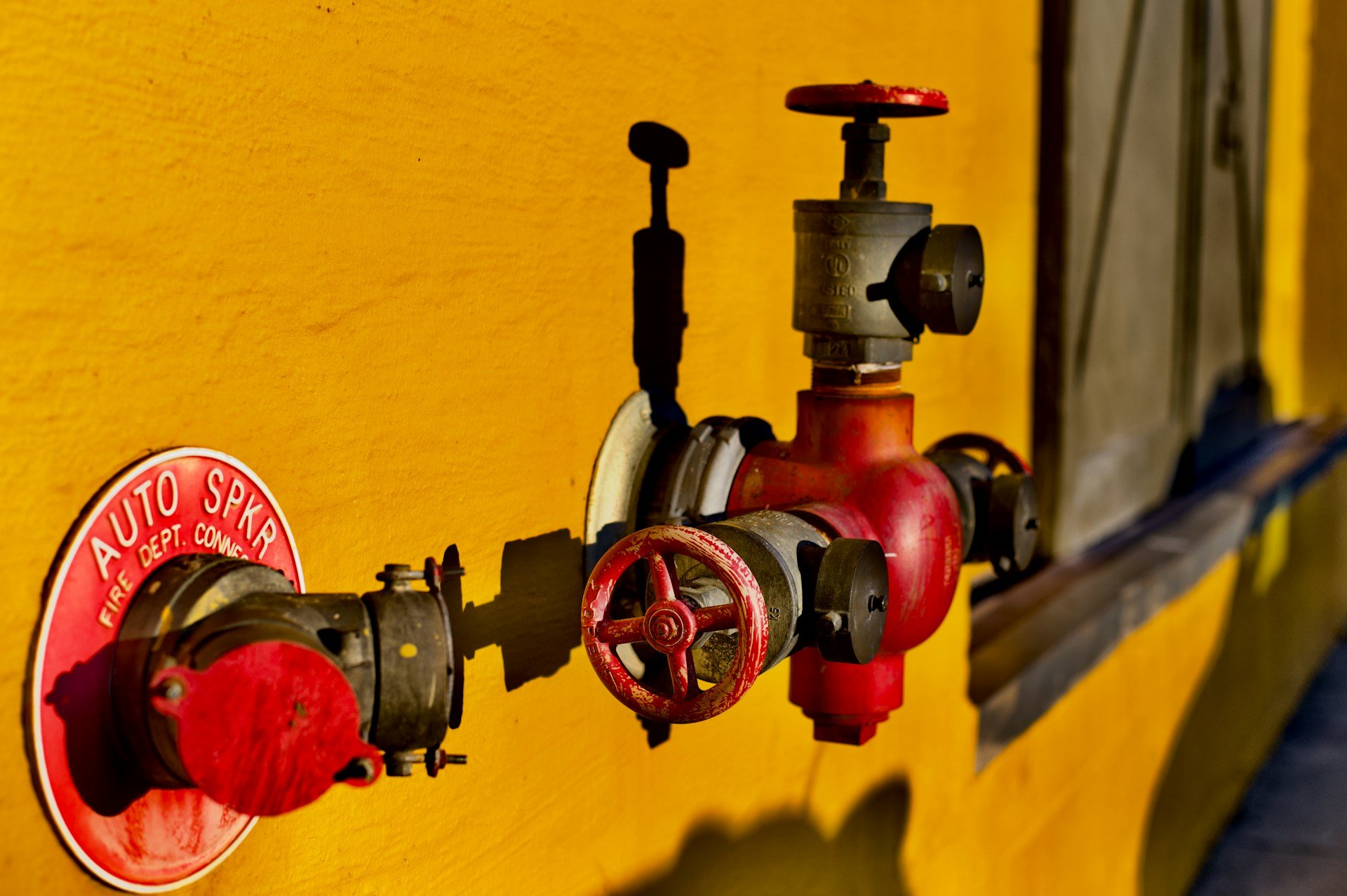
Do you ever walk into a commercial building and wonder what’s keeping you safe from fires?
If you don’t, you should. Most business owners ignore fire safety systems in commercial buildings until it’s too late. That’s a huge problem considering fires in commercial buildings cost building owners more than $2.4 billion each year.
Here’s the kicker…
Fire safety systems in commercial buildings are more than just regulatory check boxes. They’re the last line of defense between your employees, customers, and assets…and a raging inferno that could take your business with it.
- Why Commercial Buildings Need Better Fire Systems
- Key Fire Safety System Components That Save Lives
- Detection Technologies That Are Going Mainstream
- Suppression Systems You Cannot Afford to Overlook
- Passive Fire Protection Most People Overlook
- Maintenance Requirements You Cannot Ignore
- The Building Regulations Changing Everything
- What You Need To Do To Make Your Building Fire Safe
- Wrapping It All Up
Related Articles
-
 What to Do If Your Employer Ignores Workplace Safety Standards
-
When Safety Isn’t Enough – How Negligence and Legal Loophol…
-
Why Understanding Employment Law Is Essential for Employees
-
How to Prove Workplace Asbestos Exposure in Mesothelioma Cases
-
Reducing Workplace Injuries in Warehousing Through Proactive Meas…
-
Why You Need an Employment Law Attorney for Workplace Safety Issu…
-
Workplace Safety First: Key Steps to Protect Your Team
-
The Worst Legal and Safety Mistakes General Contractors Make
-
Construction Workers’ Comp: 3 Unique Challenges and Solutions


Why Commercial Buildings Need Better Fire Systems
Commercial buildings present a host of fire risks that residential homes do not.
Hundreds (sometimes thousands) of people on each floor. Multiple floors. Complex electrical and HVAC systems. Hazardous materials all over the place.
That’s a recipe for disaster without serious protection.
The stats tell a grim story. Nonresidential building fires increased 19% from 2014 to 2023. The number of deaths caused by these fires? A 70% increase during the same time.
But here’s the thing most people don’t realize…
Fire engineering services have come a long way since just smoke detectors and sprinklers. Today, we have AI and IoT technology that can predict and respond to fire threats automatically.
Leading providers like beca.com are setting the standard with integrated approaches that combine active and passive fire protection, along with intelligent building monitoring. This is not your grandpa’s fire safety solutions anymore.
The truth is if you truly want to understand fire safety in commercial buildings, you have to see it as a complex ecosystem. Each piece is critical. If one thing fails, it can bring down the whole system.
And that’s why you need to understand each piece of the fire safety puzzle…
Key Fire Safety System Components That Save Lives
Okay, let me show you what really keeps commercial buildings safe.
Fire detection systems are your first line of defense. These are no longer your grandma’s smoke alarms. They include:
- Heat detectors for areas where smoke detectors are not appropriate
- Flame detectors for instant fire detection
- Air sampling systems that literally “sniff” the air for smoke particles
But all this detection is pointless without the right alarm systems.
Your fire alarm system should do three critical things. Alert building occupants ASAP. Notify emergency services automatically. Activate the suppression systems (if you have them) without needing a human to push a button.
Doesn’t sound too hard, right?
Wrong. Most commercial buildings are way behind on integrating these systems properly. They look at each component as its own silo when it should be a fully integrated team of systems.
Detection Technologies That Are Going Mainstream
The fire safety industry is in the middle of a tech revolution right now.
IoT connected systems are the big thing. They do not just detect fires. They predict them. They analyze building conditions, recognize patterns, and warn you of the risks way before any fire even starts.
Here’s some cool stuff…
New aspirating smoke detection (ASD) systems can sense smoke particles 1,000 times smaller than traditional smoke alarms. We’re talking about the difference between spotting a fire in its “incipient” stage (way before you can even see smoke) versus when it’s already full blown.
Artificial Intelligence (AI) driven systems are even better:
- Predictive maintenance alerts for when equipment is about to fail
- Real-time risk assessments of the whole building
- Automatic adjustments to the system based on occupancy and other factors
But don’t let the tech hype blind you from the basics. The fanciest, smartest system you can install means squat if you do not install it correctly and maintain it.
Suppression Systems You Cannot Afford to Overlook
Detection systems are useless without suppression systems.
Sprinkler systems are by far the gold standard for commercial buildings. They are easy to use, simple, and amazingly effective. A properly designed and maintained sprinkler system has been proven to control 96% of fires where they activate.
But sprinklers are not your only option any more.
Water mist systems are starting to become more popular, especially in buildings that house sensitive electronic or mechanical equipment. They use up to 90% less water than traditional sprinklers and provide the same (sometimes better) level of fire protection.
Gas suppression systems are your solution when you cannot use water:
- Server rooms/data centers
- Museums/archives
- Electrical rooms
- Kitchen hoods and cooking appliances
The key is you have to match the suppression system to the risks your building faces. There is no one size fits all.
Passive Fire Protection Most People Overlook
Here is something most people completely miss…
Passive fire protection is just as important as the active systems. These are the parts of the building that contain fires without you having to do anything.
Fire rated walls and doors that form compartments and prevent the spread of fire. If you do it right, these can contain a fire for up to 4 hours. That can mean the difference between minimal damage and total loss.
Key passive fire protection elements include:
- Fire resistant structural materials
- Intumescent coatings that expand when heated
- Fire stops that seal off wall penetrations
- Smoke barriers that prevent toxic gases from spreading
Most building owners obsess over active fire protection and completely ignore passive fire protection. It’s like having a bulletproof vest with no back panel.
Maintenance Requirements You Cannot Ignore
Fire safety systems are worthless if you do not maintain them.
I cannot stress this enough. The best fire safety system in the world is completely useless if you never test or maintain it. When your fire safety system fails…people die.
Key maintenance tasks include:
- Monthly visual inspections of all equipment
- Quarterly tests of the alarm system
- Annual full system inspections
- Repairs/replacements of any deficient items ASAP
Most business owners look at maintenance as an expense they want to minimize. In truth, it’s an investment that prevents catastrophic losses.
The Building Regulations Changing Everything
Fire safety regulations are getting tougher every year.
The UK just announced that all new residential care homes will be required to have sprinklers starting in March 2025. The US is about to roll out a host of enhanced requirements for commercial buildings that are going to apply in all 50 states.
Let me tell you the bottom line here…
Compliance is no longer optional. If you fail to meet fire safety regulations, you will get hit with massive fines, legal liability, and criminal charges if someone is injured or dies in a fire.
What You Need To Do To Make Your Building Fire Safe
Building a truly fire-safe commercial building takes more than just purchasing equipment and calling it a day.
You have to have a holistic strategy that accounts for every possible risk in your building. This means you need to understand your risks, pick the right system, and maintain it like your business depends on it. Because it does.
Training is also important. Your employees have to know how your systems work, where to exit the building, and what they should do in an emergency. The best fire safety system will not save someone if they don’t know what to do.
Wrapping It All Up
Fire safety in commercial buildings is about way more than just following the rules and regulations.
It’s about creating a place where your people can work without having to fear for their lives in the event of a fire.
The technology is here. Smart fire detection systems, advanced suppression technology, and intelligent monitoring systems give you layers upon layers of fire protection.
The key is to see fire safety as one big system. Every component has to work together. Maintenance ensures the systems continue to work properly. Training ensures your people know what to do in an emergency.
This is an investment that pays for itself many times over, not only in prevented losses, but also in just having peace of mind.