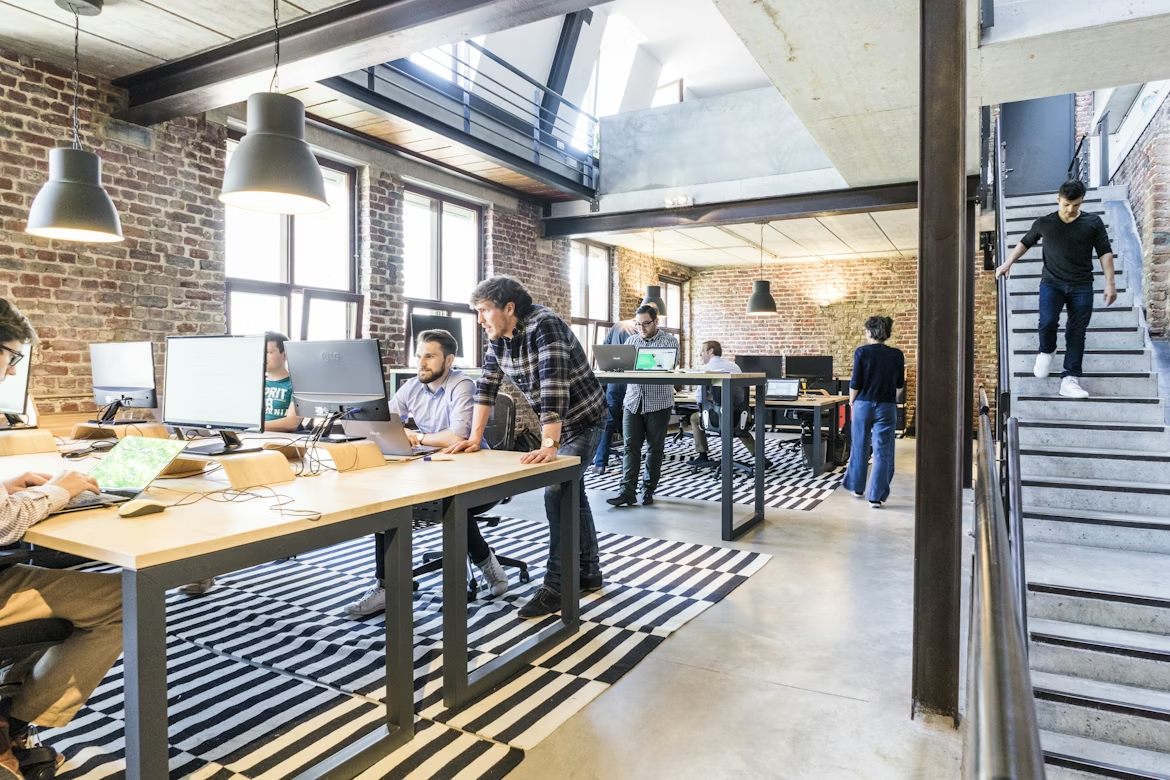
If your office is only half-full on any given Tuesday, do you actually know who is walking through the front door? Hybrid work is a fantastic win for employee flexibility and morale, but it fundamentally alters how we manage corporate spaces. Many organisations were quick to update their digital security when transitioning from traditional work environments to remote work. Yet, few have taken a similar approach to updating the physical security aspects of their offices. As such, there has to be an equally significant transition in how we protect the physical space within which our offices are housed.


Tightening Up the Digital Paper Trail
The traditional sign-in sheet at your front desk is a significant compliance risk for businesses operating in a hybrid model. When employees transition from working at their home offices to working within the company’s physical locations, it creates a need to track employee status on-site or remote as an integral component of both data protection policies and maintaining accurate fire safety records. Implementing a digital visitor management system provides a secure method for storing sensitive information while also automating log entries. Combining a digital visitor management system with a mandatory smart badge system will ensure that all individuals within the building are being tracked in real-time. A digital visitor management system also produces clear and compliant audit logs for the compliance officer, while providing seamless check-in experiences for visitors.
Securing Hot Desks and Shared Spaces
Shared workspaces are a very effective way of managing the office space; however, if staff do not follow “clear desk” policies, then the information stored on those workstations may be at risk. Staff will often leave confidential documents or other information on their workstation when using a hot desking environment. This creates a significant security issue. To minimise this problem, employers can use smart storage solutions which allow employees to store sensitive information in an appropriate manner. Employers also need to enforce close-of-play procedures to ensure that all equipment is shut down, and sensitive documentation has been removed from the workspace. The use of lockable lockers by employers provides hybrid workers with an opportunity to store their paperwork securely throughout the working day. Developing these simple practices will help create an organised, professional and compliant workplace.
Managing the Extended Working Day
The hybrid schedule creates irregular working times as individuals work at odd hours. The traditional hours of operation in buildings do not apply when your employees want to code at midnight. An upgrade to the physical security system will enable an intelligent and adaptive, permission-based, extended working day based on each employee’s unique schedule. A modern system is able to grant automatic access outside of normal business hours to certain members of your staff while still keeping the entire perimeter of your building completely secure during times when there are fewer people in the building.
Prioritising Workplace Safety Expectations
Employee safety looks entirely different when the office is mostly quiet. Lone worker regulations and health and safety compliance still apply, even if only two people are using an entire floor. Providing clear communication channels and visible safety protocols gives on-site staff complete confidence. Employers must update first-aid and fire warden rosters to reflect hybrid patterns, ensuring there is always designated coverage on active days. Knowing exactly who is on-site allows management to execute emergency procedures flawlessly, keeping people safe and fulfilling your legal duty of care.
Building a Resilient Workspace
Embracing hybrid work successfully means aligning your physical operational habits with your flexible culture. Modernising systems protects your intellectual property, safeguards your team, and guarantees compliance with minimal friction. Investing in smart access control, digital tracking, and clear on-site habits turns your workplace into a secure, productive environment built for the future of work.