
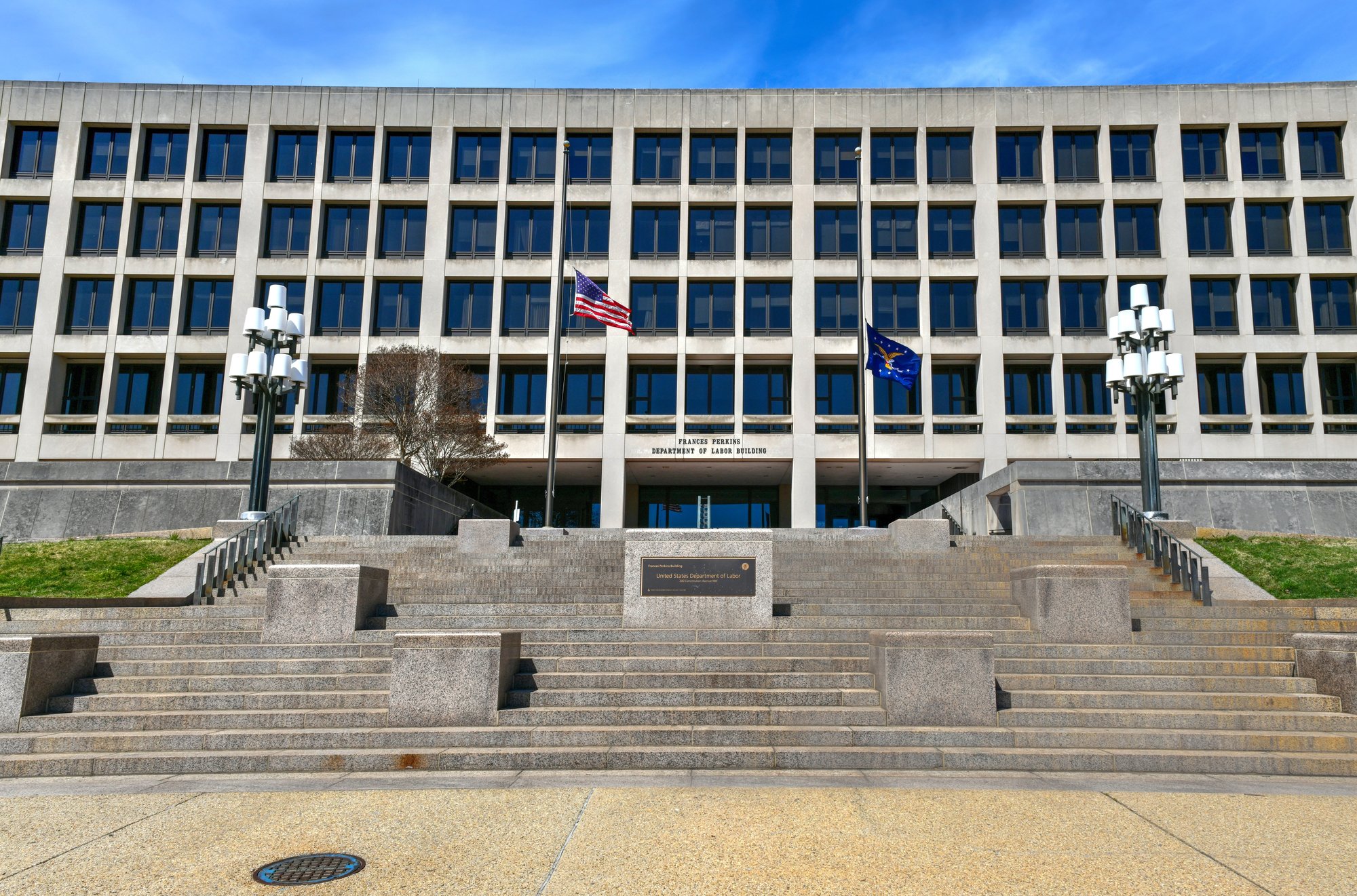
Each time a new party takes control of the White House, regulatory policies change throughout all federal agencies. And the agencies that regulate employees and employers are not different. Now that the it has been more than a month since President Trump’s inauguration, we have a better understanding of what those changes will mean for the US Department of Labor (DOL), the Equal Employment Opportunity Commission (EEOC), and the National Labor Relations Board (NLRB).
US Department of Labor (DOL)
Currently, Trump’s nomination for Labor Secretary, Lori Chavez-DeRemer, is winding her way through the nomination process. Lori Chavez-DeRemer is a former republic congresswoman from Oregon is considered to have some sympathy for worker rights and unions that stands in contrast to the republican rank and file. We will have to wait to see what changes, if any, Chavez-DeRemer will bring is she is confirmed by the Senate.
While we wait to find out if Chavez-DeRemer will become the newest Labor Secretary, the DOL has made administrative changes that reflect potential policy changes. For example, the DOL has brought back two appointees from his previous tenure as president. These two assistant secretaries include:
- Troy Finnegan was appointed as the Assistant Secretary of Labor for Administration and Management
- Ross Stewart was appointed as the DOL’s Executive Secretary
Additionally, the DOL appointed Randel Johnson as the DOL’s Administrative Review Board Chair. Although Johnson was not a prior Trump appointee to the position, he has a history that includes working as a partner at Seyfarth Shaw LLP, a pro-management law firm, and as a senior vice president for Labor Immigration & Employee Benefits at the U.S. Chamber of Commerce.
As a reminder, the US Department of Labor enforces the following laws:
- Fair Labor Standards Act (FLSA)
- Occupational Safety and Health Act (OSHA)
- Family and Medical Leave Act (FMLA)
- Davis-Bacon and Related Acts
- McNamara-O’Hara Service Contract Act
- Executive Order 11246
- Migrant and Seasonal Agricultural Worker Protection Act (MSPA)
- Section 1188 — Admission of Temporary H-2A Workers
- H-2B Program
- Employee Retirement Income Security Act (ERISA)
Equal Employment Opportunity Commission
Andrea Lucas was first appointed to the EEOC by Trump in 2020, and he has now designated her as the Acting Chair. And she has not waited long to make her policies attention clear.
On January 20, 2025, President Trump signed Executive Order 14168 which addressed issues regarding sex and gender. Just eight days later, the EEOC issued a press release addressing the executive order. According to the EEOC, Lucas had already taken the following actions:
- Announced that one of her priorities—for compliance, investigations, and litigation—is to defend the biological and binary reality of sex and related rights, including women’s rights to single-sex spaces at work.
- Removed the agency’s “pronoun app,” a feature in employees’ Microsoft 365 profiles, which allowed an employee to opt to identify pronouns, content which then appeared alongside the employee’s display name across all Microsoft 365 platforms, including Outlook and Teams. This content was displayed both to internal and external parties with whom EEOC employees communicated.
- Ended the use of the “X” gender marker during the intake process for filing a charge of discrimination.
- Directed the modification of the charge of discrimination and related forms to remove “Mx.” from the list of prefix options.
- Commenced review of the content of EEOC’s “Know Your Rights” poster, which all covered employers are required by law to post in their workplaces.
- Removed materials promoting gender ideology on the Commission’s internal and external websites and documents, including webpages, statements, social media platforms, forms, trainings, and others. The agency’s review and removal of such materials remains ongoing. Where a publicly accessible item cannot be immediately removed or revised, a banner has been added to explain why the item has not yet been brought into compliance.
Then, three weeks later, the EEOC issued another press release addressing anti-American bias. According to Lucas:
Unlawful bias against American workers, in violation of Title VII, is a large-scale problem in multiple industries nationwide . . . Many employers have policies and practices preferring illegal aliens, migrant workers, and visa holders or other legal immigrants over American workers—in direct violation of federal employment law prohibiting national origin discrimination. Cracking down on this type of unlawful discrimination will shift employer incentives, decreasing demand for illegal alien workers and decreasing abuse of the United States’ legal immigration system.”
As a reminder, the Equal Employment Opportunity Commission enforces the following laws:
- Title VII of the Civil Rights Act of 1964 (Title VII)
- The Pregnancy Discrimination Act
- The Pregnant Workers Fairness Act of 2022 (PWFA)
- The Equal Pay Act of 1963 (EPA)
- The Age Discrimination in Employment Act of 1967 (ADEA)
- Title I of the Americans with Disabilities Act of 1990 (ADA)
- Sections 102 and 103 of the Civil Rights Act of 1991
- Sections 501 and 505 of the Rehabilitation Act of 1973
- The Genetic Information Nondiscrimination Act of 2008 (GINA)
National Labor Relations Board
On February 3, 2025, Trump appoint William Cowen as the Acting General Counsel of the NLRB. Cowen has long history of working for the NLRB including having stints as a Board Member, Chief of Staff to NLRB Chairman Robert Battista, and as Solicitor.
As of all the new appointments, Cowen has been the most active in changing the NLRB’s policies. On February 14, 2025, he rescinded no fewer than eight memos issued by the prior NLRB Chairman. The rescinded memos include:
- GC 21-06 and GC 21-07 that had enhanced potential remedies to which employees may have been eligible when they suffered unfair labor practices by their employer
- GC 21-08 that addressed the collective boarding rights of student-athletes under the NLRA
- GC 23-02 that placed greater restrictions on employers when electronically monitoring employees
- GC 23-05 that restricted employers and employees from entering into severance agreements that included certain non-disclosure and non-disparagement provisions
- GC 23-08 and GC 25-01 that restricted non-compete agreements if they chill employees from engaging in NLRA protected activities