
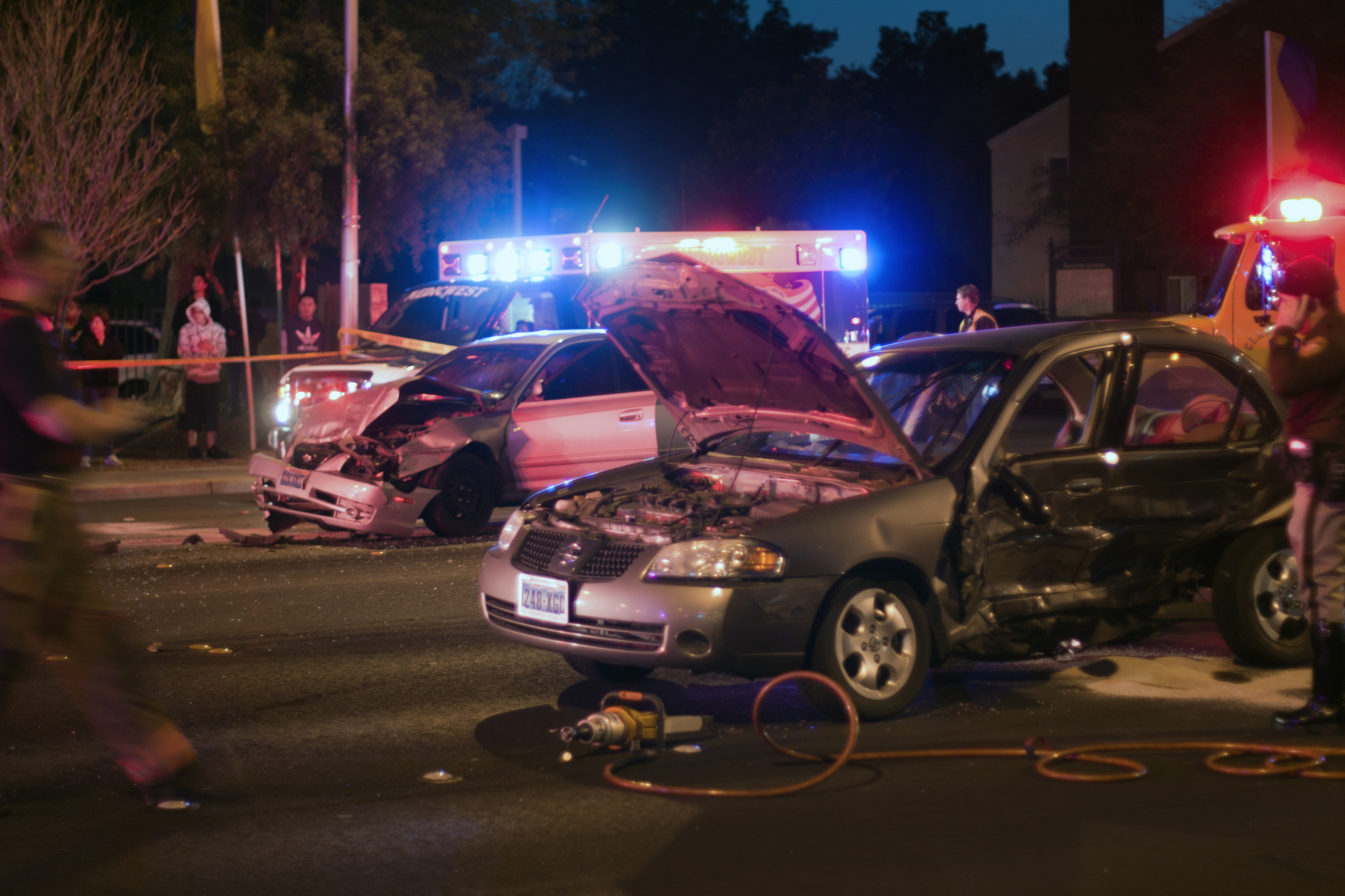
Most people assume a car accident claim is won or lost much later, in a conference room or a courtroom. In practice, the shape of a claim is usually set in the first month, long before anyone talks about settlement figures. Evidence disappears, memories blur, medical records either exist or they do not, and insurance companies begin forming an opinion about the case within days.
Houston makes this more pressing than most places. Harris County carries some of the heaviest traffic volume in the country, and corridors like I-45, the 610 Loop, US-59, and Beltway 8 produce a steady stream of collisions involving commercial vehicles, rideshare drivers, and uninsured motorists. Each of those adds a layer of complication that a straightforward fender bender does not have.
What follows is a general, practical look at how those first thirty days tend to unfold under Texas law, and where people most often lose ground without realizing it.
Related Articles
-
 How Can a Car Accident Affect Your Job?
-
Understanding the Legal Rights and Options for Victims of 10 Whee…
-
Exploring the Role of Fatigue Monitoring in Preventing Car Accide…
-
How Company Car Accidents Affect Insurance Coverage: What Employe…
-
Reason Why You Must Hire an Auto Accident Lawyer
-
What Happens If I Lose My Job Because of a Car Accident?


Day One: The Scene Record Is the Only Record You Get
Whatever is documented at the scene becomes the backbone of the claim. Whatever is not documented is usually gone for good.
Texas law requires a peace officer to complete a crash report (Form CR-3) when a collision on a public road results in injury, death, or apparent property damage above the statutory threshold. That report will carry the officer’s narrative, a diagram, contributing factors, and citation information. It is not binding on anyone, and officers do make errors, but it is the document every adjuster reads first.
Beyond the official report, a few things are worth capturing while still at the scene if you are physically able:
- Photographs of final vehicle positions before anything is moved, not just close-ups of the damage
- The full width of the roadway, including skid marks, debris fields, signage, and signal timing
- Names and phone numbers of independent witnesses, who become nearly impossible to trace later
- Insurance cards and driver’s license details for every driver involved, not only the one at fault
- Any commercial markings, DOT numbers, or company logos on a vehicle involved
That last point matters more than people expect. If a commercial vehicle is involved, the carrier may have telematics, dashcam footage, and driver logs that are subject to routine retention schedules measured in weeks. Those records are frequently overwritten before anyone thinks to ask for them.
Days Two Through Ten: Reports, Records, and the First Adjuster Call
The CR-3 report generally becomes available through the Texas Department of Transportation’s Crash Records Information System roughly a week to ten days after the collision. Reading it early is worthwhile, because factual errors are far easier to address while the responding officer still remembers the call.
The medical side runs on a parallel clock. Gaps in treatment are the single most common argument insurers use to discount an injury claim. A person who waits three weeks to see a doctor because the pain seemed manageable has handed the other side a ready-made theory that the injury came from something else. Soft tissue injuries and concussions in particular often present days after the impact, and the medical file needs to reflect that progression honestly and continuously.
Somewhere in this window, the other driver’s insurer will call. The call will be friendly. It will also usually include a request for a recorded statement and a medical authorization. Neither is legally required of you, and both tend to be used in ways that narrow a claim rather than advance it. A broad medical authorization, in particular, can open up years of unrelated history for the insurer to comb through.
This is the point at which many people start weighing whether to handle the claim themselves or bring in a houston car accident lawyer to manage the communication and preservation work. The deciding factor is usually not the size of the crash but the complexity of it: disputed fault, more than two vehicles, a commercial or government-owned vehicle, an uninsured driver, or injuries that are still being diagnosed.
The Texas Fault Rules Working in the Background
Texas is an at-fault state, and two rules quietly govern almost every outcome.
The 51 percent bar. Texas applies modified comparative negligence. Your recovery is reduced by your own percentage of responsibility, and if you are found more than 50 percent responsible, you recover nothing at all. This is why insurers invest so much effort in assigning even a modest share of blame to the injured party. Moving the number from 20 percent to 55 percent does not trim the claim, it eliminates it.
Minimum coverage is genuinely minimal. Texas requires liability limits of 30/60/25: thirty thousand dollars per injured person, sixty thousand per accident for bodily injury, and twenty-five thousand for property damage. A single overnight hospital stay can exhaust that. When the at-fault driver carries nothing more, the claim often shifts to the injured person’s own uninsured and underinsured motorist coverage, which Texas insurers must offer and which can only be declined in writing. It is worth checking your own policy declarations page early, because many people carry UM/UIM coverage without knowing it.
The same applies to personal injury protection. Texas insurers are required to offer PIP, commonly at a default of twenty-five hundred dollars, and it pays medical costs and a portion of lost wages regardless of who caused the crash. It is often the fastest money available in the first month.
Days Ten Through Thirty: Building the Damages Picture
Liability answers who pays. Damages answer how much, and that half of the case is built from paperwork that has to be gathered deliberately.
Under Texas law, recoverable damages generally include medical expenses already incurred and reasonably expected in the future, lost earnings and lost earning capacity, property damage, and non-economic harm such as physical pain, mental anguish, physical impairment, and disfigurement. Each category needs its own proof.
Lost wages require employer documentation, not an estimate. Future medical costs require a treating physician willing to state what is likely ahead. Diminished value on a repaired vehicle, which is a legitimate claim in Texas, requires an appraisal rather than an opinion. Non-economic damages are supported less by argument than by a consistent, contemporaneous record of how the injury changed daily function.
A simple daily log kept during this period is one of the more useful and least used tools available. Notes on pain levels, missed work, cancelled activities, and sleep disruption carry real weight months later, precisely because they were written when the details were fresh.
Deadlines That Are Easy to Miss
Texas gives most personal injury claimants two years from the date of the collision to file suit. Two years feels generous, and that is exactly why it is dangerous. Claims routinely reach the two-year mark with medical treatment unfinished and liability still disputed, leaving no room to negotiate.
Several situations cut that window dramatically:
- Claims involving a city, county, or state vehicle are subject to governmental immunity rules and formal written notice requirements that can run in months rather than years, and some municipal charters impose their own short notice periods
- Many insurance policies contain their own contractual notice provisions requiring prompt reporting
- Evidence preservation letters to trucking companies, rideshare operators, and businesses with exterior cameras need to go out within weeks, because ordinary retention cycles do the deleting
Wrongful death and survival claims follow their own rules regarding who may bring the claim and within what period, which adds a layer families are rarely prepared for.
Four Mistakes That Repeat
Accepting a quick settlement. Early offers arrive before the full medical picture exists. A release signed in week three closes the claim permanently, including for treatment discovered in month six.
Posting about the crash or daily life online. Public posts are routinely pulled into claim files and used to argue that an injury is overstated.
Treating the property damage claim as the whole claim. Vehicle repair and injury compensation are separate. Resolving one does not resolve the other, but poorly worded releases sometimes attempt to bundle them.
Assuming a police citation settles fault. A citation is evidence, not a verdict. Fault can be reallocated, and often is.
The Practical Takeaway
None of this requires expertise. It requires early, boring diligence: get the report, see a doctor and keep seeing one, read your own policy, preserve what will otherwise be deleted, write things down, and be cautious about signing anything in the first month.
Most claims are not lost to a clever argument on the other side. They are lost to a thirty-day gap in treatment, a recorded statement given too casually, a witness who was never identified, or a deadline that passed while everyone assumed there was still time.
This article is general information about Texas law and procedure and is not legal advice. Specific situations vary, and anyone facing a serious claim should consult a licensed attorney about their own circumstances.
