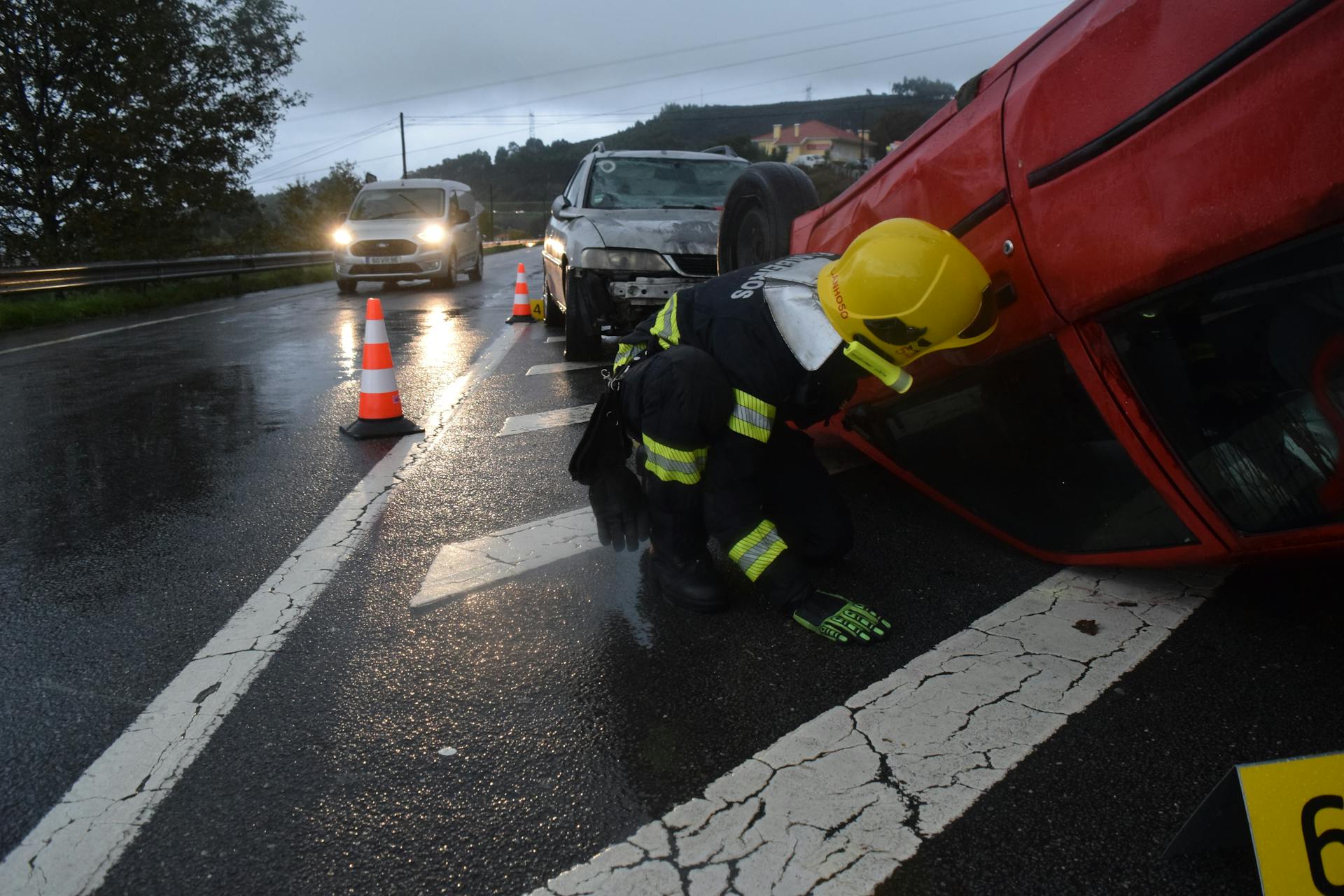
Two drivers sustain similar injuries in similar accidents. One is in a densely trafficked Los Angeles interchange; the other is on a residential street in a smaller suburban community. The legal framework that governs their claims is identical — California negligence law, the same insurance code provisions, the same rules about evidence and damages. The experience of pursuing those claims will be very different, and the outcomes, for reasons that have nothing to do with the merits of either case, may diverge significantly.
How location affects a car accident claim is one of the least discussed factors in personal injury law, partly because it is less visible than the legal framework and partly because it requires knowledge of specific local markets to explain accurately. This piece addresses what injury victims in the Los Angeles area need to know about the geographic dimension of their claim — from how traffic density affects liability analysis to how local court dynamics and insurer behavior shape the negotiation.
- How Traffic Density and Local Road Conditions Factor Into Car Accident Liability
- Why Car Accident Claims in High-Volume Metro Areas Take Longer to Resolve
- How Local Court Experience Changes What a Personal Injury Attorney Can Negotiate
- What Injury Victims in Santa Clarita Should Expect from the Claims Process
- What Injury Victims in Pasadena Should Know About the Local Claims Landscape
- The Decision That Reflects the Geography
Related Articles
-
 How Can a Car Accident Affect Your Job?
-
 Understanding the Legal Rights and Options for Victims of 10 Whee…
-
Exploring the Role of Fatigue Monitoring in Preventing Car Accide…
-
How Company Car Accidents Affect Insurance Coverage: What Employe…
-
Reason Why You Must Hire an Auto Accident Lawyer
-
What Happens If I Lose My Job Because of a Car Accident?
-
Determining Fault in a Multi-Vehicle Highway Accident


How Traffic Density and Local Road Conditions Factor Into Car Accident Liability
Liability in a California car accident is determined by negligence — which driver failed to exercise reasonable care, and how that failure caused the accident. But the definition of reasonable care is context-specific, and the context in high-density metro areas is different from what prevails in suburban or rural corridors.
In Los Angeles, where traffic volumes on major corridors routinely exceed the roadways’ designed capacity, the standard of what a reasonably attentive driver is expected to do includes behaviors that would be unnecessary in a lower-traffic environment. Lane changing on the 405 or the 10 at rush hour involves a different set of attentional demands than the same maneuver on a suburban surface street. Following distances appropriate at 35 miles per hour are different from those required in stop-and-go freeway traffic. Local road conditions — known merging hazards, specific intersection timing patterns, lane configurations that regularly produce conflict points — are part of the factual context within which liability is assessed.
Expert accident reconstruction in high-density metro cases often needs to account for these conditions. A reconstruction that treats a Los Angeles freeway accident as a generic two-car collision, without incorporating the specific traffic flow conditions, time-of-day patterns, and roadway characteristics of the specific location, presents a less complete picture than one that contextualizes the accident within the environment where it occurred.
Local road condition issues — potholes, missing lane markings, inadequate signage, malfunctioning traffic signals — can introduce government entity liability into an accident case that appears to involve only private parties. California’s Government Tort Claims Act governs claims against public entities, with specific notice requirements and shorter timelines than standard personal injury claims. An accident caused in part by a road defect on a government-maintained surface requires identification of the government defendant and compliance with those requirements — and a local attorney who is familiar with the specific roadways where the accident occurred is better positioned to identify that issue than one who is not.
Why Car Accident Claims in High-Volume Metro Areas Take Longer to Resolve
The timeline of a personal injury claim in Los Angeles County is, for practical and structural reasons, longer than in many other jurisdictions — and injury victims who do not understand this often make decisions that undermine their claims because of the pressure created by an unexpectedly extended process.
Court congestion is a primary factor. The Los Angeles Superior Court handles one of the highest caseloads of any trial court in the country. Cases that proceed to litigation are assigned to a queue, and that queue has a wait time. Trials that would be set within six to nine months in a less congested jurisdiction may be set twelve to eighteen months out in the Los Angeles system, and that timeline can extend further with motions practice and scheduling adjustments.
The large number of active personal injury cases in the Los Angeles market also affects insurer behavior. Major carriers with significant presence in Southern California have established claims handling processes that are calibrated to the local litigation environment — which includes a realistic probability of encountering skilled plaintiff’s counsel with genuine trial experience. This calibration cuts both ways: experienced insurers in the LA market tend to engage more seriously with well-documented claims, while also having more sophisticated tools for defending against weaker ones.
The complexity of multi-party liability situations is also greater in high-volume traffic environments. A claim that in a rural context would involve two vehicles and two insurers may in an LA freeway context involve three or four vehicles, commercial vehicles with separate fleet insurers, and contested apportionment of fault among multiple parties. Each additional party and insurer adds procedural complexity and extends the timeline to resolution.
How Local Court Experience Changes What a Personal Injury Attorney Can Negotiate
An attorney’s knowledge of the specific courts where a case will be filed — the judges who handle personal injury matters, their procedural preferences, their inclinations on motions practice, and the typical jury demographics of the specific venue — affects how a case is prepared and how it is presented.
In the Los Angeles area, this local knowledge matters across significantly different communities. A case filed in the Santa Clarita courthouse involves a different jury pool, a different judicial temperament in the presiding departments, and a different set of local insurers and defense firms than one filed in the Pasadena courthouse or in the downtown LA complex. These differences are not trivial. Verdict ranges for comparable cases vary meaningfully across the court system, and an attorney who knows those patterns can calibrate the case strategy accordingly.
Negotiating with insurance carriers who have experience in the local market also rewards local familiarity. A claims adjuster who regularly handles litigation in a specific courthouse knows the same things the plaintiff’s attorney knows about local verdict tendencies and judicial temperament. A plaintiff’s attorney who demonstrates that familiarity is signaling that their assessment of the case is grounded in local reality — which makes it harder to dismiss.
For injury victims in the greater Los Angeles area, working with a los angeles injury lawyer who handles cases across the specific courts and communities of the region — not just the downtown courthouse — provides a negotiating and litigation position that is calibrated to the actual landscape, not a generic version of it.
What Injury Victims in Santa Clarita Should Expect from the Claims Process
Santa Clarita’s position in the Los Angeles metro — connected to the urban core by the I-5 corridor but with its own suburban character — creates an accident claim environment that reflects both influences. The freeway and arterial corridors that connect Santa Clarita to the rest of the region, including the Newhall Pass interchange, generate significant accident volume involving commuters, commercial vehicles, and out-of-region drivers who may be unfamiliar with local traffic patterns.
Claims arising from Santa Clarita accidents are typically handled through the Los Angeles Superior Court system, though the specific courthouse and the case assignment depend on the nature of the claim and the amount in dispute. The local claims handling environment includes both regional adjusters from major carriers and independent adjusters handling cases across multiple Northern Los Angeles communities.
Commercial vehicle involvement is a specific issue on the I-5 corridor and its approaches, where trucking traffic associated with the logistics industry is substantial. Claims involving commercial vehicles require the additional investigation and regulatory analysis that the trucking industry’s federal oversight demands — HOS compliance, maintenance records, driver qualification files — and that investigation has a tighter evidence window than standard auto accident cases.
For accident victims in the Santa Clarita area, a car accident lawyer santa clarita who understands both the local court system and the specific traffic dynamics of the I-5 corridor brings a level of local knowledge that shapes the case from the investigation phase forward.
What Injury Victims in Pasadena Should Know About the Local Claims Landscape
Pasadena presents a different accident claim environment from either the central LA corridors or the suburban communities to the north. The mix of urban density around Old Town and the Colorado Boulevard corridor, the significant pedestrian and cyclist traffic in those areas, and the commuter corridors connecting Pasadena to the 210 and the 134 freeways produce a variety of accident scenarios that require different analytical approaches.
Intersection accidents are a significant category in Pasadena’s denser commercial areas, where traffic signal timing, pedestrian crossing activity, and commercial vehicle delivery patterns create conflict points that generate accidents with complex liability questions. Accidents occurring in the vicinity of Cal Tech, Pasadena City College, and the tournament of roses routes involve elevated pedestrian and cyclist traffic that creates both higher accident risk and higher severity when accidents occur.
The Pasadena courthouse serves the San Gabriel Valley region and has its own judicial temperament and caseload characteristics. An attorney who has litigated in the Pasadena courthouse and who understands how cases are handled there — including the typical timeline from filing to trial setting and the local jury pool characteristics — is working with knowledge that affects both trial preparation and settlement positioning.
For drivers and pedestrians injured in accidents in the Pasadena area, a car accident lawyer pasadena ca with specific experience in the local court system and familiarity with the liability patterns in the area’s accident-prone corridors provides a claim built on local knowledge rather than generic process.
The Decision That Reflects the Geography
The geographic dimension of a personal injury claim is not a detail that can be addressed after the case is already in motion. The decisions made in the early investigation — which evidence to preserve, which parties to identify, which courts to anticipate, which insurer behaviors to expect — are shaped by local knowledge that the attorney either has or does not have from the start. An injury victim who hires an attorney without considering whether that attorney has genuine experience in the specific courts and communities relevant to their case may be sacrificing a form of knowledge that the insurer on the other side possesses. Major carriers operating in Los Angeles have years of data on verdict tendencies by courthouse, on the local plaintiff’s bar and their patterns, and on the specific accident dynamics of different corridors. An attorney who knows the same information is operating at parity. One who does not is at a structural disadvantage that the facts of the case, however strong, cannot fully compensate for.