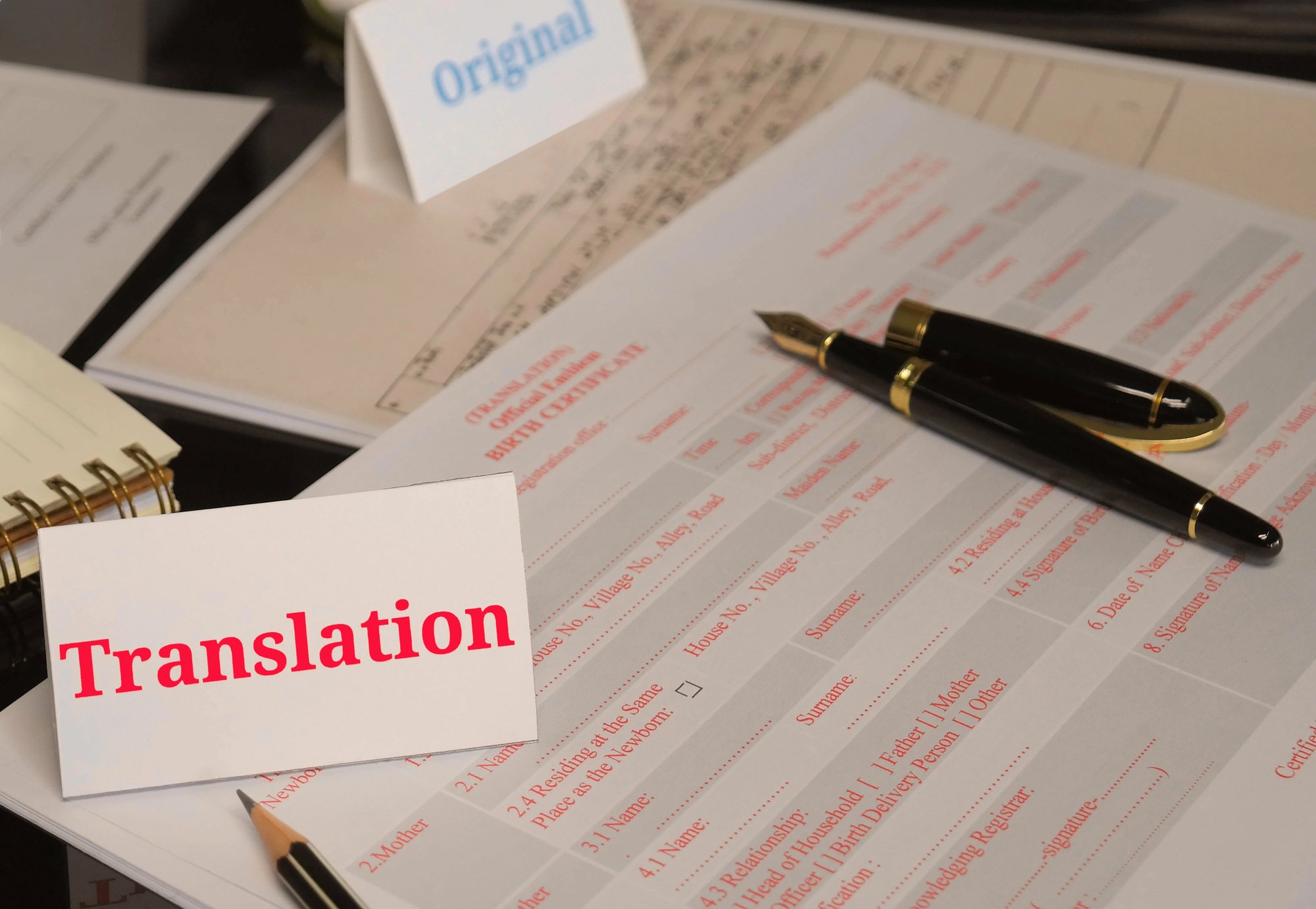
HR documents aren’t just forms to file away. They set the rules of trust, safety, and compliance in every workplace. From job offers to safety manuals, these documents shape how companies treat their employees and follow the law.
But in today’s multilingual workforce, one mistranslation can have serious consequences. A confusing safety policy could lead to injury. An unclear benefits statement could spark discrimination claims. These mistakes don’t just create frustration. They can cost companies money, reputation, and even lawsuits.
In this article, we’ll break down what HR content includes, why accurate translation matters, the risks of getting it wrong, and the best practices that keep organizations protected.
- What Counts as HR Content in a Legal Context
- Best Practices for Legally Sound HR Translations
- Legal Risks of Poorly Translated HR Documents
- Real-World Cases and Examples
- Compliance Requirements in Multilingual Workforces
- How Poor HR Translation Damages Employer-Employee Relations
- Preventing Legal Risks with Professional Translation
- Future of HR Translation and Compliance
- Conclusion
Related Articles
-
 Update: Will the DOL’s new exempt employee rules be delayed…
-
New Overtime Law Changes and HR Guidance in April 2024
-
Mental Health in the Workplace: Legal Obligations and Best Practi…
-
Handling of Final Pay Checks and Unpaid Compensation Upon Death o…
-
What the Law Says About Personal Internet Usage at Work
-
How to Overcome Communication Challenges in Your Remote Teams
-
Workplace Harassment 101: Understanding Its Types, Signs, and Imp…
-
7 Critical Employment Law Updates You Need in 2024


What Counts as HR Content in a Legal Context
HR documents go far beyond simple internal communication. They form the framework that governs how a company operates, protects its employees, and complies with labor regulations. Because many of these materials carry direct legal implications, inaccurate translations can easily distort employee understanding of rights and obligations, exposing organizations to significant risk.
Employee handbooks and workplace policies
Employee handbooks define company expectations, from conduct and attendance to disciplinary procedures, codes of ethics, and flexible policies pertaining to employee’s families. A faulty translation can turn a professional guideline into a perceived threat, or a clear disciplinary step into something ambiguous or unfair.
Importantly, a 2024 HR Compliance Trends Report found that companies with translated handbooks experienced 40% fewer internal disputes and compliance issues compared to those without translated versions.
Employment contracts and offer letters
Contracts are legally binding documents that detail the terms of the employer-employee relationship. Misstating a probation period, mistranslating overtime policies, or incorrectly phrasing termination clauses can all lead to disputes or even litigation.
In global companies, where cross-border hires are common, ensuring contracts are translated with precision is essential to prevent costly misunderstandings.
Health and safety guidelines
In fields like construction, manufacturing, and healthcare, accurate health and safety documentation is vital for preserving employee well-being. Language miscommunication can be deadly.
OSHA estimates that language barriers contribute to 25% of job-related accidents. Moreover, magazines and reports highlight that these misunderstandings greatly increase accident risk on multilingual worksites
Read more: Workplace Safety First: Key Steps to Protect Your Team
Performance reviews and disciplinary notices
Performance reviews shape promotions, raises, and career growth, while disciplinary notices can decide whether an employee stays with the company. When translations are inaccurate, fair feedback can come across as biased or even discriminatory. This erodes trust and can quickly escalate into formal disputes.
Globally, 86% of employees say poor communication is a leading cause of workplace failures, and in the U.S. alone, miscommunication costs businesses about $1.2 trillion each year, showing just how damaging translation errors in HR communication can be.
Training materials, especially compliance-related
Compliance training on topics like anti-discrimination, harassment, data privacy, and cybersecurity relies on precise wording. A mistranslated phrase can weaken a company’s stance on harassment or leave gaps in privacy rules, putting both employees and the business at risk.
These mistakes don’t just reduce training effectiveness. They can also expose companies to legal liability if regulators find that staff weren’t properly informed. Yet only 12% of organizations have advanced compliance and ethics programs, while nearly 40% rely on basic or reactive training, meaning poor translations can make already weak programs even riskier.
Best Practices for Legally Sound HR Translations
Organizations can strengthen HR translation and reduce legal risks by following a structured set of best practices. These measures not only improve accuracy but also ensure that translated HR content upholds compliance, clarity, and employee trust.
Consider secure translation platforms
Given that HR documents often contain sensitive employee information, companies should prioritize using secure translation platforms with encryption and recognized compliance certifications (e.g., GDPR, ISO 27001, SOC 2).
SOC2-compliant translation platforms and translators that we recommend are MachineTranslation.com, DeepL, and Smartling, which offer both the speed of automation and the security assurances businesses need. By relying on platforms that undergo rigorous audits and meet international data protection standards, organizations can ensure confidentiality without compromising translation accuracy.
Develop a terminology glossary
A well-maintained glossary of key HR and legal terms, such as “probation period,” “non‑compete clause,” “overtime,” or “constructive dismissal,”ensures consistency across all translations. In fact, 70% of all translation errors are terminology-related, highlighting how crucial a glossary is for avoiding costly mistakes and confusion.
Modern AI-powered translation platforms like MachineTranslation.com, can assist in automating this process by generating lists of key terms that organizations may use to build and maintain their glossaries. This functionality helps reduce manual effort while improving consistency across documents and languages.
Moreover, glossaries dramatically improve workflow efficiency. One study found that after implementing a multilingual glossary, a team reduced translation time from 6 days down to just 1 day, an 83% reduction in turnaround time.
Use culturally sensitive language
Direct, literal translations can sometimes cause confusion or even offense. For example, disciplinary terms that sound neutral in one language may carry harsh connotations in another, or certain benefits may be interpreted differently depending on cultural context.
By applying cultural sensitivity, organizations ensure that translations respect local norms while preserving the original legal intent. This is especially critical for multinational companies, where policies must resonate with employees in diverse regions without losing compliance precision.
Update translations regularly
HR documents are never static. Laws, regulations, and company policies evolve, and translations must keep pace. For instance, a change in data privacy law or workplace safety standards requires immediate updates to ensure all employees are properly informed.
Organizations should implement a review cycle, quarterly, biannually, or whenever new regulations are enacted, to verify that translated HR materials remain accurate and current. Outdated translations can be as risky as mistranslations, exposing the company to compliance gaps.
Involve legal counsel
Even the most carefully translated HR document should undergo a legal review before being distributed. A qualified lawyer, ideally one fluent in both the source and target languages, can verify that the translation accurately reflects legal obligations. This additional step acts as a safeguard against subtle errors that could shift liability, weaken contractual protections, or cause misinterpretation of employee rights. Legal review is especially crucial for contracts, compliance training, and safety guidelines.
Legal Risks of Poorly Translated HR Documents
Translation mistakes in HR documents are not merely clerical errors; they are legal liabilities. The consequences include:
- Employment law violations: Misinterpreted labor rights or working-hour policies can lead to non-compliance with wage laws, overtime regulations, or leave entitlements.
- Discrimination claims: Ambiguous or mistranslated language in anti-discrimination or benefits policies can create grounds for lawsuits. For example, unclear wording around maternity leave might be perceived as gender bias.
- Workplace safety breaches: If employees fail to understand safety protocols due to translation errors, accidents may occur, leaving the company liable.
- Breach of confidentiality: Clauses about data security or non-disclosure must be precise. A mistranslation could inadvertently weaken confidentiality protections.
- Contract disputes: Misunderstood terms in translated contracts often lead to litigation, arbitration, or union grievances.
These risks show how mistranslations can escalate into serious compliance and legal problems.
Real-World Cases and Examples
Several companies have faced legal repercussions due to poor HR translations.
Multinational corporations and lawsuits:
A European company faced litigation when Spanish-speaking employees misunderstood their overtime compensation due to a mistranslated policy. The company was fined for wage violations.
Union disputes:
In Canada, mistranslated collective bargaining agreements triggered union strikes. The translated version altered vacation accrual terms, leading to weeks of disputes and lost productivity.
Regulatory fines:
U.S. companies have been penalized for failing to provide OSHA (Occupational Safety and Health Administration) materials in Spanish for non-English-speaking workers. Such cases highlight how translation oversights can result in direct legal penalties.
These examples underscore the real financial and reputational costs of poor HR translation.
Compliance Requirements in Multilingual Workforces
Governments and regulators worldwide recognize the importance of accessible HR content. Employers must ensure compliance across multiple regions:
- United States: Federal and state laws often require key HR documents, such as safety instructions and anti-discrimination notices, to be provided in languages employees understand. The EEOC (Equal Employment Opportunity Commission) emphasizes language accessibility.
- European Union: GDPR mandates that data privacy notices must be clear and comprehensible in the employee’s language. Employment law directives also require translated contracts for cross-border workers.
- Asia-Pacific: Countries like Japan and China demand that employment contracts and compliance policies be available in the local language to be legally enforceable.
Industry-specific obligations also apply. Healthcare employers must translate HIPAA compliance documents, while manufacturers must provide safety materials in all relevant languages. Ignoring these requirements can result in heavy penalties.
How Poor HR Translation Damages Employer-Employee Relations
Beyond compliance, mistranslated HR documents corrode trust between employers and employees.
Loss of trust and engagement:
Employees who cannot fully understand policies may feel excluded or mistrusted, undermining engagement. Additionally, over 60% of Wage and Hour Division (WHD) investigators are multilingual, reflecting the agency’s emphasis on outreach to limited-English proficient workers across nearly 50 different languages.
Misinterpretation of benefits and rights:
Incorrect translations of pension, leave, or healthcare benefits can lead to resentment and even lawsuits. Crucially, 1 in 6 companies surveyed faced litigation stemming directly from payroll errors, which often intersect with HR policy misunderstandings.
Turnover and grievances:
Confusion over policies fuels dissatisfaction, increasing turnover rates and formal complaints. In a survey, 51% of workers report increased stress due to unclear or insufficient communication, while 41% suffer from lower productivity as a result.
Ultimately, accurate HR translations are not only about avoiding lawsuits, they’re about fostering fairness, inclusion, and loyalty.
Preventing Legal Risks with Professional Translation
To avoid these risks, businesses must treat HR translation with the same seriousness as legal contract review.
Certified translators:
Using certified translators ensures accuracy in legal and HR terminology. Unlike generic translation tools, they account for nuance and context.
Human + AI collaboration:
AI-driven translation can accelerate turnaround, but human oversight ensures legal and cultural accuracy. A hybrid model is both cost-effective and reliable.
Quality assurance processes:
Establishing multi-stage reviews, translator, editor, and legal counsel helps catch errors before documents reach employees.
This layered approach minimizes the chance of costly misinterpretations.
Future of HR Translation and Compliance
The future of HR translation lies at the intersection of technology and compliance.
- AI-powered compliance translation tools: Emerging AI platforms are trained on legal and HR-specific terminology, reducing errors while increasing efficiency.
- Multilingual onboarding platforms: Digital platforms now allow employees to complete training, sign contracts, and access resources in their native language.
- Predictive analytics: Some HR compliance systems use predictive analytics to flag documents with high legal risk, ensuring translations are checked with extra scrutiny.
These advancements promise to reduce the risks and costs associated with poor translations, while making workplaces more inclusive.
Conclusion
Poorly translated HR documents are not just a communication issue, they are a legal and financial liability. From lawsuits and union disputes to compliance fines and damaged employee relations, the risks are too great to ignore.
Organizations must invest in accurate, professional HR translations supported by legal oversight and technology. Doing so not only protects against legal exposure but also builds a culture of trust and inclusivity. In the global workplace, accurate HR translation is no longer optional, it’s a cornerstone of compliance, safety, and employee well-being. Businesses that prioritize secure, accurate HR translations today will avoid tomorrow’s lawsuits, safeguard their reputation, and strengthen their workforce.