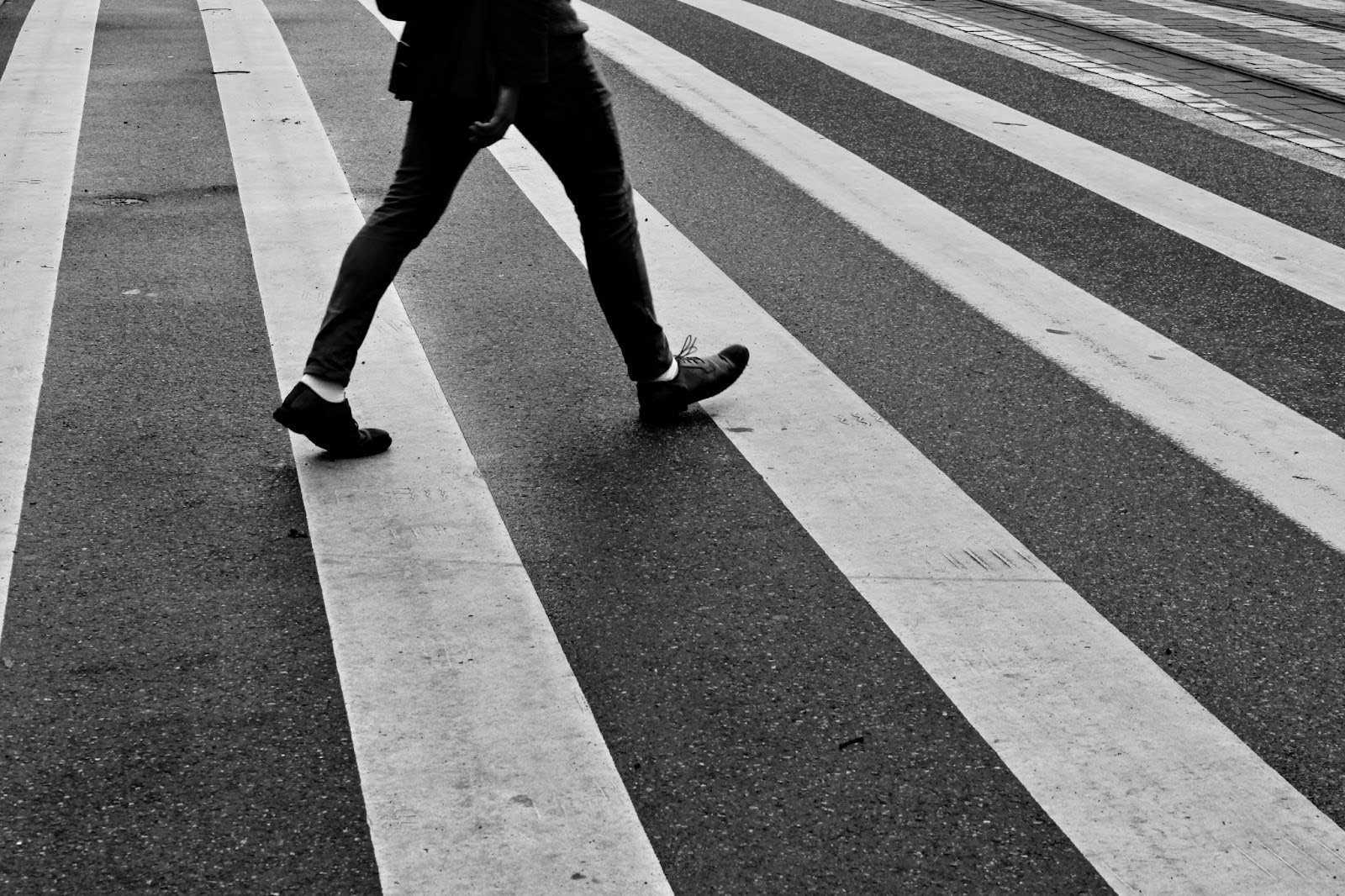
Pedestrian safety remains a pressing issue in Texan urban environments, where the vulnerability of walkers is reflected in stark statistics. In 2023 alone, Texas recorded 5,924 crashes involving pedestrians, leading to 808 deaths and 1,457 severe injuries—pedestrians accounted for only 1% of traffic accidents, yet nearly 19% of all roadway fatalities. This data, published by the Texas Department of Transportation (TxDOT), underscores how lethal such incidents can be and the urgent need for preventative and legal safeguards.


Right-of-Way Ambiguities at Signalized and Unsignalized Crosswalks
At signalized intersections in Texas, pedestrians may proceed on a green indication “within a marked or unmarked crosswalk,” except when the only green is a turn arrow, which limits crossing in that direction. Where pedestrian control signals are present, a “WALK” permits crossing and requires drivers to stop and yield, while a pedestrian must not start on “DON’T WALK/WAIT”; if already in the crosswalk, they must continue to a sidewalk or safety island. TxDOT reinforces that drivers must yield to people in crosswalks—including when turning—highlighting a common source of conflicts during permissive turns. Ambiguity often arises when pedestrians have a vehicle green but no pedestrian signal, because drivers turning on green must still yield to pedestrians lawfully crossing. Local governments may also require strict compliance with traffic signals by ordinance, adding another layer to what pedestrians and drivers must follow.
At unsignalized crosswalks (no active signal), Texas law requires drivers to stop and yield when a pedestrian is on their half of the roadway or close enough on the opposite half to be in danger. Pedestrians, however, may not step suddenly from the curb into the path of a close vehicle, and drivers may not pass a vehicle stopped at a crosswalk to permit crossing. “Crosswalk” includes not only marked crossings but also the unmarked area at intersections connecting the lateral lines of sidewalks—an often misunderstood point that nonetheless carries legal protection. Between adjacent signalized intersections, pedestrians are limited to marked crosswalks, and away from crosswalks, they must yield to vehicles when crossing. Regardless of location or markings, drivers have a statutory duty to exercise due care to avoid colliding with pedestrians.
Pedestrian Responsibilities and Comparative Negligence in Texas
In Texas, pedestrians share a significant responsibility in preventing accidents. They must not suddenly step off a curb into traffic when vehicles are too close for a driver to stop safely, even when they legally have the right-of-way at marked or unmarked crosswalks. This requirement comes straight from the Texas Transportation Code, which seeks to balance pedestrian rights with real-world traffic safety considerations.
Texas follows a modified comparative negligence rule, commonly known as the “51 % bar.” Under this system, pedestrians who are 50 % or less at fault can still recover a portion of their damages, although their compensation is reduced by their fault percentage. If they are 51 % or more at fault, however, they are barred entirely from recovery.
Even if a pedestrian bears some fault—say, by crossing outside a crosswalk or ignoring a signal—they may still recover damages as long as their fault stays under the 51 % threshold. That’s when the insights of a specialized professional like a Car injury lawyer Abilene become invaluable, helping accurately apportion fault and protect a pedestrian’s right to compensation under Texas’s proportionate responsibility framework.
Driver Liability and Criminal Enforcement: The Lisa Torry Smith Act and Beyond
In Texas, pedestrians share a significant responsibility in preventing accidents. They must not suddenly step off a curb into traffic when vehicles are too close for a driver to stop safely, even when they legally have the right-of-way at marked or unmarked crosswalks. This requirement comes straight from the Texas Transportation Code, which seeks to balance pedestrian rights with real-world traffic safety considerations.
Texas follows a modified comparative negligence rule, commonly known as the “51 % bar.” Under this system, pedestrians who are 50 % or less at fault can still recover a portion of their damages, although their compensation is reduced by their fault percentage. If they are 51 % or more at fault, however, they are barred entirely from recovery.
Even if a pedestrian bears some fault—say, by crossing outside a crosswalk or ignoring a signal—they may still recover damages as long as their fault stays under the 51 % threshold. That’s when the insights of a specialized professional like a Car injury lawyer in Abilene become invaluable, helping accurately apportion fault and protect a pedestrian’s right to compensation under Texas’s proportionate responsibility framework.
Statute of Limitations & Preservation of Evidence
In Texas, most personal-injury claims—including pedestrian accidents at intersections—must be filed within two years from the date the cause of action accrues; missing this deadline typically bars the claim. A distinct procedural rule applies if the defendant is a governmental entity: under the Texas Tort Claims Act, a written notice of claim must be served within six months of the incident, or the claim may be dismissed regardless of merit. Because these deadlines run swiftly, injured individuals benefit from acting immediately to safeguard critical evidence—surveillance footage, vehicle data, and official crash records often deteriorate or are purged quickly without advance preservation.
Sources: Texas Civil Practice & Remedies Code § 16.003 and § 101.101 (two-year statute of limitations for personal injury; six-month notice requirement under TTCA).
Texas courts treat spoliation—the destruction or loss of evidence—as a serious issue, but only the trial court (not the jury) may determine whether a preservation duty existed and whether it was breached. In Brookshire Bros. v. Aldridge, the Texas Supreme Court held that only intentional spoliation (i.e., purposeful destruction of evidence) justifies a harsh remedy like a jury instruction; negligent or routine loss does not. Courts must also consider proportionality when imposing sanctions, and preserving key materials—like CR-3 crash reports, EDR downloads, surveillance or cellphone video, and medical records—from the outset helps avoid later disputes and supports both civil and criminal claims.
Sources: Brookshire Bros. v. Aldridge, Texas Supreme Court (spoliation framework and remedies).