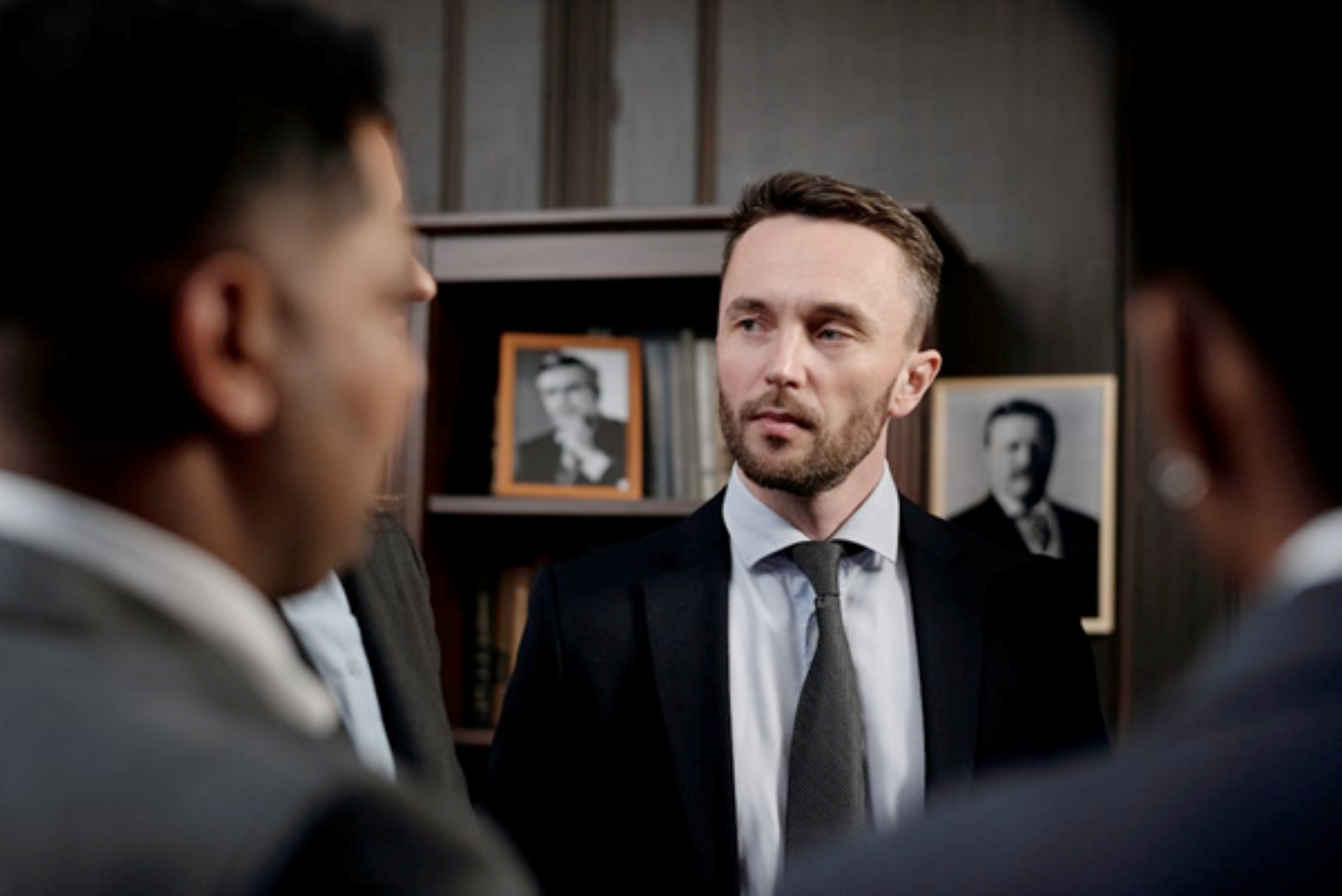
Ever notice how a client sizes you up before you’ve even spoken?
Like a chess grandmaster clocking the board before moving a single piece, they’re already deciding if you look like someone worth listening to.
That’s the brutal truth: in law, your words may argue the case, but your clothes argue for your competence long before you open your mouth.
- Start here: navy or charcoal two-button suit; white or light-blue shirt; conservative tie; polished cap-toe Oxfords; quiet watch; trimmed grooming. (Think “Wall Street Journal cover shot” – serious but not flamboyant.)
- Non-negotiables: clean nails, neutral scent, lint-free cloth, pressed collar, fresh breath kit. Ever seen a partner glance down at your hands mid-handshake? You’d be shocked how fast a hangnail becomes a metaphor for sloppy discovery notes.
- Fast read: clients scan shoulders, shoes, silhouette in seconds. Crisp lines matter more than brand tags – expensive cloth means little if the sleeves puddle like curtains.
- Beyond the basics: legal clients are conditioned to equate visible order with mental order. If your jacket hem is uneven, subconsciously they may assume your case files are too. That’s why every crease, every polish stroke, every neatly pressed seam works like a whispered promise: “I’ve got this handled.”
Mini-summary – first contact: clarity, cleanliness, coherence.
Related Articles
-
 SaaS Accountants: The Future of Accounting for the Digital Age
-
The Growing Importance of Online Education in Employment Law
-
How to Start Freelancing in Guest Posting for Blogs and Work Remo…
-
A Step-by-Step Guide to Preparing for Your RBT Certification
-
The Evolving Landscape of Employment: Opportunities and Challenge…
-
IT Counter Offer vs New Job Offer Comparison NZ: Making the Right…


Set the Meeting Baseline with One-Notch Rule
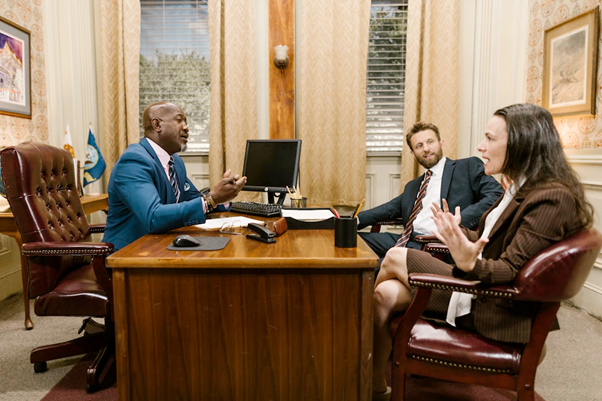
Picture this: you walk into Google HQ in a pinstripe three-piece. How’s that going to play? Exactly – like bringing a Montblanc to a hackathon. The trick is calibrating to the room, not your mood.
- Venue check: A glass-walled HQ signals heightened formality – think navy and black. A boutique creative studio? Ease back – unstructured tailoring lands better. Court-appointed mediation room? Form jumps back up. Cafés? Smart separates do the job.
- One-notch rule: Mirror the client’s baseline, then add one subtle step. If they’re in polos and chinos, arrive in pressed trousers, shirt, and blazer. If they’re in suits, wear yours and add a tie with restrained patterning. That extra inch says, “I respect this table.”
- Role read: Founders in sneakers? Unstructured blazer and dark chinos fit. General Counsel steeped in case law? Structured suit, silk tie, leather briefcase. (Think: if Atticus Finch were meeting Elon Musk, who would blink first?)
- Signal audit before you go: Invitations, receptionist uniforms, LinkedIn profile photos – all breadcrumbs leading to the right choice.
- Practical hack: Slip one tie in a case. Misread the room? A quick restroom knot swap saves the day.
Mini-summary – context first: outfit follows room, not mood.
Suit Fit That Signals Competence in 8 Checks

Clothes that fit are like grammar in a brief: invisible when done right, glaring when wrong.
- Shoulders: Fabric ends exactly where your shoulder bone ends. Overshoot and you’ve got divots that scream “fresh grad sale rack.”
- Chest: Button your jacket – lapels should hug, not pull. That X-wrinkle? It’s like typos on the first page of your contract.
- Waist: Suppression sharpens your V-shape, but too tight and you’re contorting like you’re hiding contraband (source). Tailors can move 1-2 inches easily.
- Sleeves: Show 0.5-0.75 in. of shirt cuff. That’s the frame for your watch, your pen, your handshake.
- Length: Hem should cover your seat – halfway between collar and floor. Any shorter and you’re channeling Thom Browne at the wrong time.
- Trousers: Medium break, fabric kissing shoe top. Too short? Clients glimpse socks, and once seen, never unseen.
- Rise: Mid to high rise keeps shirts tucked for hours. Low-rise trousers? You’ll be hoisting your waistband mid-cross-exam.
- Vents: Double vents let you reach, stand, sit without ballooning. Single vents puff like an unfiled brief.
- Alteration plan: Shoulders? Forget it. Waist, sleeves, hems? Green light. Jacket length? Irreversible.
- Deeper tactic: Rotate suits. Wool fibers need 48 hours to recover. Wear the same one daily and shine patches sprout faster than questions in cross-exam.
Mini-summary – fit filter: if lines stay clean while sitting, you’re good.
Bags & Briefcases That Pre-Organize the Meeting
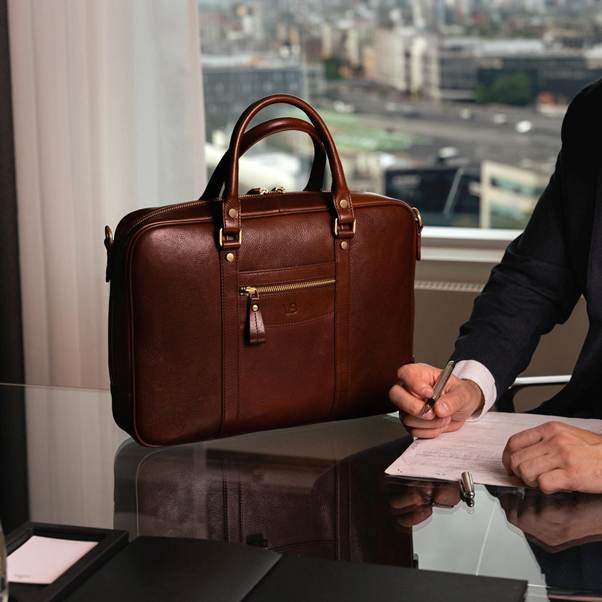
Think of your briefcase as your stage. Spill papers across the table like a college freshman, and the room already doubts your case handling.
- Capacity: Must fit a 14-16 inch laptop, A4 pad, slim charger kit, card case, and binder. Anything bulkier looks like you’re moving house.
- Configuration: Top-handle briefcase = gravitas. Structured leather tote = modern consultative vibe. Backpack? Fine on the train, unacceptable at the boardroom door.
- Materials: Full-grain leather ages gracefully; bonded leather cracks by month six. Lined compartments keep wires from strangling documents. Von Baer advises that full-grain vegetable-tanned leather is best for a lawyer’s briefcase when you want it to look professional for 10+ years.
- Color map: Black with navy/charcoal. Brown with grey. Oxblood with navy (the literary man’s choice – think Tolstoy meets LSE).
- Modern reality: Briefcases remain standard, but slim silhouettes avoid “dad from 1989” vibes.
- Buying filter: Pick full-grain, structured, with laptop sleeve and pen slot. When you pull out a document, the absence of chaos speaks louder than words.
Mini-summary – carry smart: the right case prevents table scatter, preserves calm.
Shirt-Tie System That Works Under Pressure
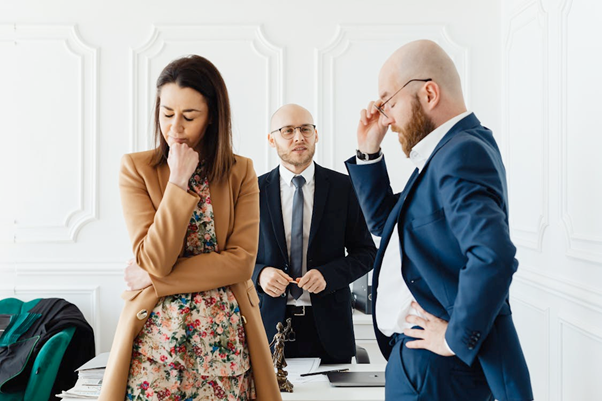
Why do senior partners stick to white and blue shirts? Because consistency saves mental bandwidth. At 6:30 a.m., decision fatigue is real.
- Shirts: White and light-blue poplin or twill. Semi-spread collars with removable stays. Keep three ironed, ready. (Imagine yourself in a deposition sweating – do you want transparency issues in that shirt fabric? Exactly. Thread count matters.)
- Ties: 3-3.25 in. width. Solids, small dots, regimental stripes. Four-in-hand for daily use; half-Windsor for boardrooms.
- Textures: Grenadine or fine twill ties photograph clean. Satin blinds cameras – think of a highlighter pen across your chest.
- Backup plan: Keep a tie rolled in a hard tube. Stain mid-meeting? Slip out, swap, return without fluster.
- Care note: Iron shirts hot enough to flatten seams, not scorch collars. Detergent residue + high heat = yellow halos you’ll never out-argue.
Mini-summary – tie logic: smaller patterns read clean on camera.
I read a great guide on lawyer fashion related to this on 1883magazine.com here.
Footwear That Closes Deals Quietly
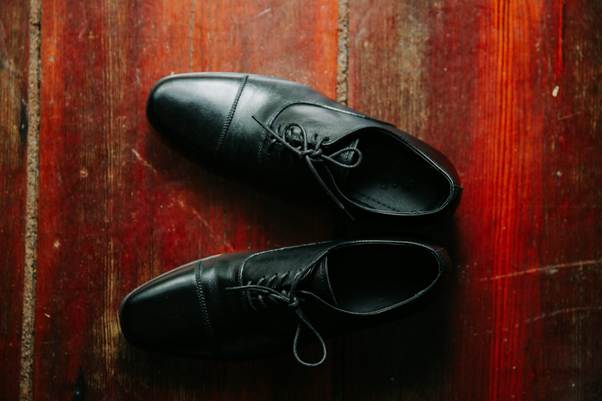
Shoes are like closing arguments – clients don’t notice good ones, but bad ones ruin everything.
- Primary pair: Black cap-toe Oxfords. Arbitration, board meetings, courtrooms. These anchor you like a judge’s gavel.
- Second pair: Dark-brown cap-toes. Perfect for client luncheons or private equity dinners where black whispers “funeral.”
- Allowable: Plain-toe derbies for internal sessions. Loafers for travel days only.
- Leather: Full-grain outlives corrected grain by decades. Think “Oxford University library bindings” versus “airport paperback.”
- Soles: Thin rubber topy grips rain-slick pavements but keeps a formal profile. Clunky rubber soles? You’ll look like you wandered in from an REI catalog.
- Care kit: Cream, wax, brush, edge dressing. Five minutes the night before – your future self will thank you.
- Socks: Over-the-calf. Match trousers, not shoes. Crossing legs mid-negotiation and flashing skin? That’s courtroom comedy.
- Pro move: Cedar shoe trees the second shoes come off. They drink sweat like Hemingway drank whiskey – quietly, effectively, leaving the leather intact.
Mini-summary – shoe test: if toe caps mirror a light source, you’re meeting-ready.
Clients Clock in Three Seconds
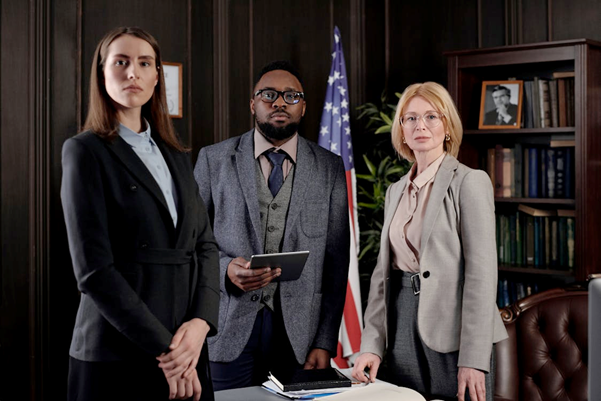
A client won’t notice your freshly edged haircut – but they’ll notice if your neckline fuzz looks like ivy reclaiming a wall at Oxford.
- Hair/beard: Keep edges sharp. Mustaches should clear lips – crumb catchers derail depositions.
- Skin: Fluorescent lights exaggerate shine. Blotting papers = instant credibility saver.
- Fragrance: Two sprays max, never wrists. Otherwise, every handshake becomes a scent bomb (source).
- Hands: Nails trimmed, knuckles ink-free. Cuticle cream beats courtroom dry-erase squeaks.
- Emergency kit: Flossers, mints, lint roller, mini steamer, stain pen. A single lint speck on black wool can become your client’s focal point when they’re nervous.
- Advanced: Hydration the night before means clear eyes the next day. Clients read fatigue as distraction – don’t let them.
Mini-summary – human details: comfort enables eye contact, which enables trust.