
Key Takeaways
- Staff members are the first line of defense, making human error the biggest security risk.
- Effective training must be practical, engaging, and relevant to a team member’s daily work.
- Active learning, like phishing simulations, is more effective than passive lectures for building security awareness.
- Leadership support is crucial for signaling that cybersecurity is a top company priority, not just another task.
- Cybersecurity training must be ongoing with regular updates to combat evolving threats.
- Outsourcing to an IT service provider can be an effective way to implement and manage a comprehensive training program.
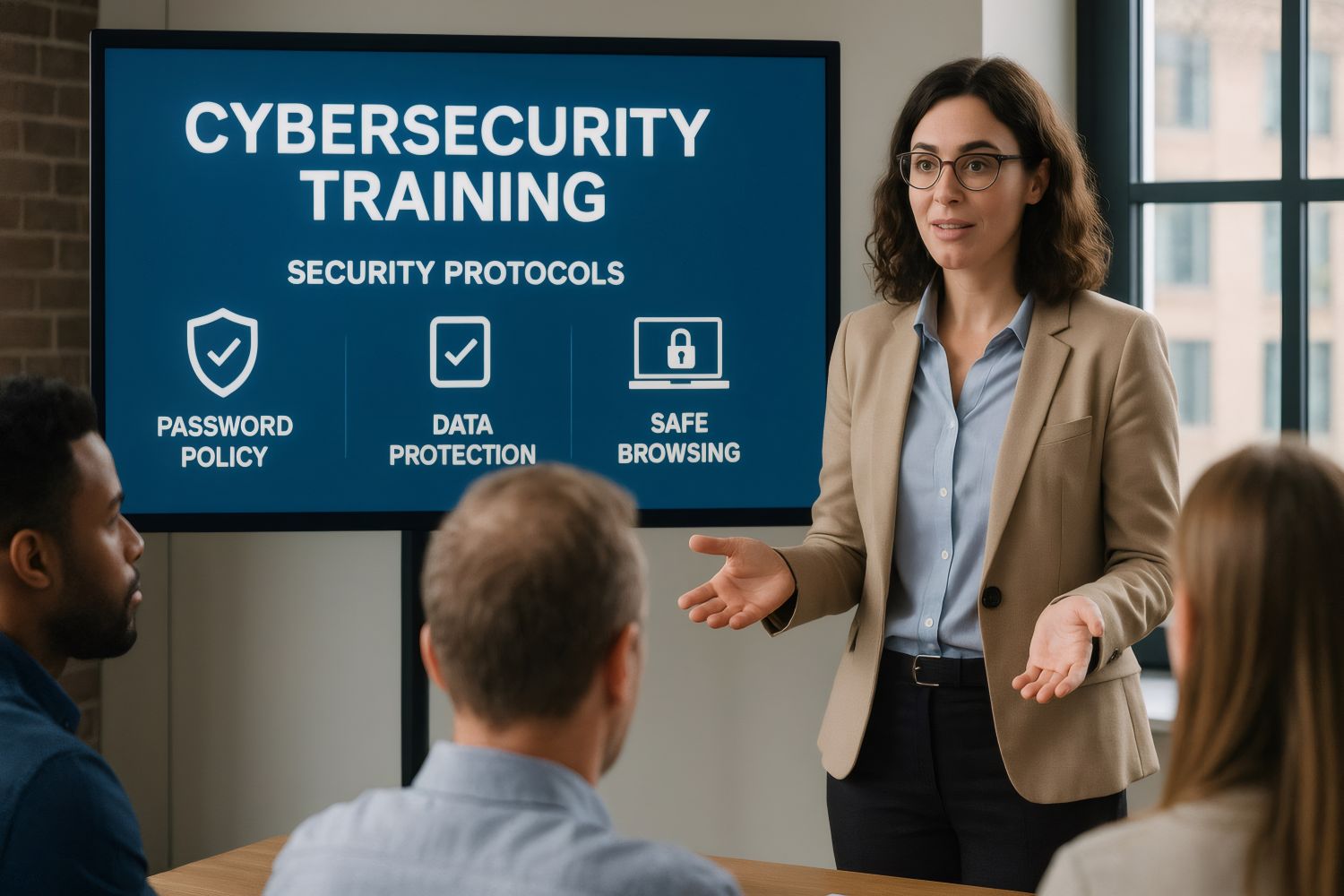
Cyber threats are becoming more sophisticated daily, and staff members often become the first target. A careless click on a suspicious email can risk sensitive data and company operations. Training your team to recognize these threats is one of the simplest and most effective ways to strengthen your defenses.
Cybersecurity awareness training goes beyond teaching rules. It helps teams understand why threats matter, how to spot them, and what actions to take when something feels off. With the right approach, training can turn every team member into an active part of your company’s security system.
If you’re wondering how to go about it, here are a few tips to make security awareness training effective and engaging for your staff:
- Understand Why Cybersecurity Training Matters
- Identify the Training Goals
- Assess Current Knowledge and Risks
- Plan the Training Content
- Choose the Right Training Format
- Address Remote and Hybrid Work Challenges
- Make the Training Relevant to Daily Work
- Include Leadership Support
- Use Real-Life Examples and Simulations
- Update Training Regularly
- Final Thoughts

Understand Why Cybersecurity Training Matters
Before you begin planning, it’s crucial to know why cybersecurity awareness training is essential. Many businesses invest in advanced security tools but overlook the human factor. Team members handle emails, files, and systems every day. Without proper knowledge, they can fall victim to phishing scams, malware, or social engineering tricks.
Training your team reduces mistakes that lead to data breaches. It also builds a security-minded culture where your staff is more likely to report unusual activity instead of ignoring it. When everyone understands their role in protecting the business, the company becomes stronger against attacks. Explaining this purpose to your team will help them see training as valuable instead of just another task.
It’s also crucial to determine whether you’ll need to outsource information technology (IT) help as early as now. Many small and medium-sized businesses may lack the resources or specialized knowledge to create a comprehensive training program in-house.
A reliable managed IT service provider can help fill those gaps by offering expert guidance and ready-made training materials that match your company’s needs. These experts stay updated on the latest cyber threats, so they can create sessions that reflect current risks instead of outdated information. They can also run phishing simulation tests, track team member progress, and adjust the program based on real results.
Identify the Training Goals
Clear goals are the foundation of any effective security training program. Decide what you want your team to learn and why it matters. Some goals include helping staff recognize suspicious emails, encouraging strong passwords, or teaching safe ways to use company devices when working remotely.
Set measurable objectives so you can check progress later. For example, aim to reduce the number of phishing clicks during simulated tests or increase the percentage of team members who enable multi-factor authentication. When goals are clear, training sessions become focused and easier to evaluate.
Assess Current Knowledge and Risks
Every business faces different cybersecurity challenges, and workers often have varying levels of awareness. An effective way to begin is by evaluating the team’s current understanding of basic security practices. Short quizzes or surveys work well for spotting common gaps in knowledge. Reviewing past security incidents can also highlight where mistakes have happened and why they occurred.
A clear picture of your company’s unique risks will help guide the training approach. For example, healthcare organizations must prioritize protecting patient data, while retail businesses may focus on safeguarding payment information. Aligning the training content with these risks makes the sessions more practical and relevant to everyday tasks.
Plan the Training Content
Once you know the goals and current gaps, create security awareness content for the training. Focus on topics that team members are most likely to encounter.
These might include:
- Recognizing phishing emails and suspicious links
- Creating and managing strong passwords
- Using secure Wi-Fi and avoiding public networks
- Reporting security incidents quickly
- Understanding malware, ransomware, and how they spread
- Safe use of personal devices for work
- Protecting sensitive information from social engineering attacks
- Following company policies on data sharing and storage
Keep the information practical and straightforward so your staff can apply it immediately. Avoid technical jargon, as unfamiliar terms can easily cause confusion and reduce engagement during training. Instead, connect concepts to real situations your staff might face at work.
For instance, instead of telling employees to avoid public Wi-Fi, explain that hackers often create fake networks to capture personal or company data. This added context helps them understand why the practice matters and makes it easier to remember.
Choose the Right Training Format
The format you choose should depend on your resources and the size of your team. Some companies hold in-person sessions led by an IT manager, while others use online courses or both.
Short, focused sessions are often more effective than long lectures. Team members are more likely to remember a 20-minute training that uses clear examples than a two-hour session filled with technical terms.
Interactive methods work exceptionally well. Simulated phishing tests, quizzes, and group discussions will keep your personnel engaged. Role-playing can also help. For instance, you can walk through what happens when a team member receives a suspicious email and let them practice reporting it.
Address Remote and Hybrid Work Challenges
Many organizations now operate with teams working from home or alternating between home and office locations. This arrangement introduces security risks that differ from those in a centralized workplace.
Personal devices, weak home network setups, and shared household equipment can expose company data to potential threats. Your security awareness program must account for these conditions so your team understands how to safeguard information wherever they work.
Practical steps can help reduce these risks and keep company data secure:
- Strengthen home Wi-Fi by using strong passwords and enabling encryption settings.
- Keep personal and work email accounts separate to avoid accidental exposure of sensitive information.
- Store company files in approved locations rather than personal devices or cloud services.
- Update devices regularly to patch security vulnerabilities and improve protection.
- Avoid using unfamiliar or public networks for work tasks unless they’re secured with a VPN.
Addressing these risks helps team members stay vigilant regardless of where they work. It ensures sensitive company data remains protected in home and office environments.
Make the Training Relevant to Daily Work
Team members are more likely to absorb information more effectively when it relates to their daily work. Illustrating concepts with examples from their work environment helps clarify the lessons.
For example, show them how a phishing email might appear in their department or demonstrate how cybercriminals could target their roles. This approach makes the training feel personal, which increases engagement and attention.
Clarifying the impact of mistakes also reinforces the importance of security. A single stolen password could expose customer data or interrupt essential business operations. Presenting these outcomes in straightforward terms helps team members recognize the stakes and encourages them to stay alert.
Include Leadership Support
Training gains strength when company leaders actively show their support. Their presence signals that cybersecurity is a priority for the entire organization, not a side task.
Managers who participate in sessions and follow the same security rules encourage their teams to mirror their behavior. Staff members are more likely to take training seriously when they see leaders applying the same practices.
Leadership also plays a vital part in communicating why cybersecurity matters. Clear messages from the top help set expectations for everyone in the company and create a unified standard for security practices.
Involving leaders throughout the program reinforces that protecting data is a shared responsibility across all levels. Their support also makes it easier to secure funding and approval for ongoing efforts, such as refresher courses and advanced tools for testing awareness.
Use Real-Life Examples and Simulations

Stories leave a stronger impact than a simple list of rules. Real attacks that have harmed other businesses in your industry provide valuable lessons and make the danger easier to understand.
Explaining what went wrong in those situations and outlining how similar mistakes could be prevented helps employees connect the training to real consequences. This approach turns abstract threats into situations they can picture.
Simulations add another layer of practical learning. Sending fake phishing emails is an effective way to test how well team members apply what they have learned. Those who fall for the simulation can receive targeted guidance to address gaps in knowledge, while those who recognize the scam can be acknowledged for their awareness.
Update Training Regularly
Cyber threats continue to change rapidly. A practice considered secure last year may already be outdated. As such, you need to review training materials at least annually and update them sooner whenever new threats or technologies appear. Staying informed about cybersecurity trends ensures the content remains relevant and responsive to current risks.
Frequent updates also help maintain team member interest. Fresh material captures attention better than repeating the same content year after year. Regular revisions show that the company prioritizes security and respects the effort team members invest in learning.
Final Thoughts
Performing cybersecurity awareness training for your teams is one of the best investments a company can make. It empowers staff to recognize and respond to threats, reducing the risk of costly breaches. A well-planned cybersecurity awareness training program focuses on simple, practical lessons that fit into everyday work.
Remember, effective training is an ongoing effort that adapts as new threats appear. Consistent reinforcement builds lasting habits and ensures your teams stay alert long after the initial session ends. When team members feel responsible for security, they become a powerful defense against even the most sophisticated security threats.