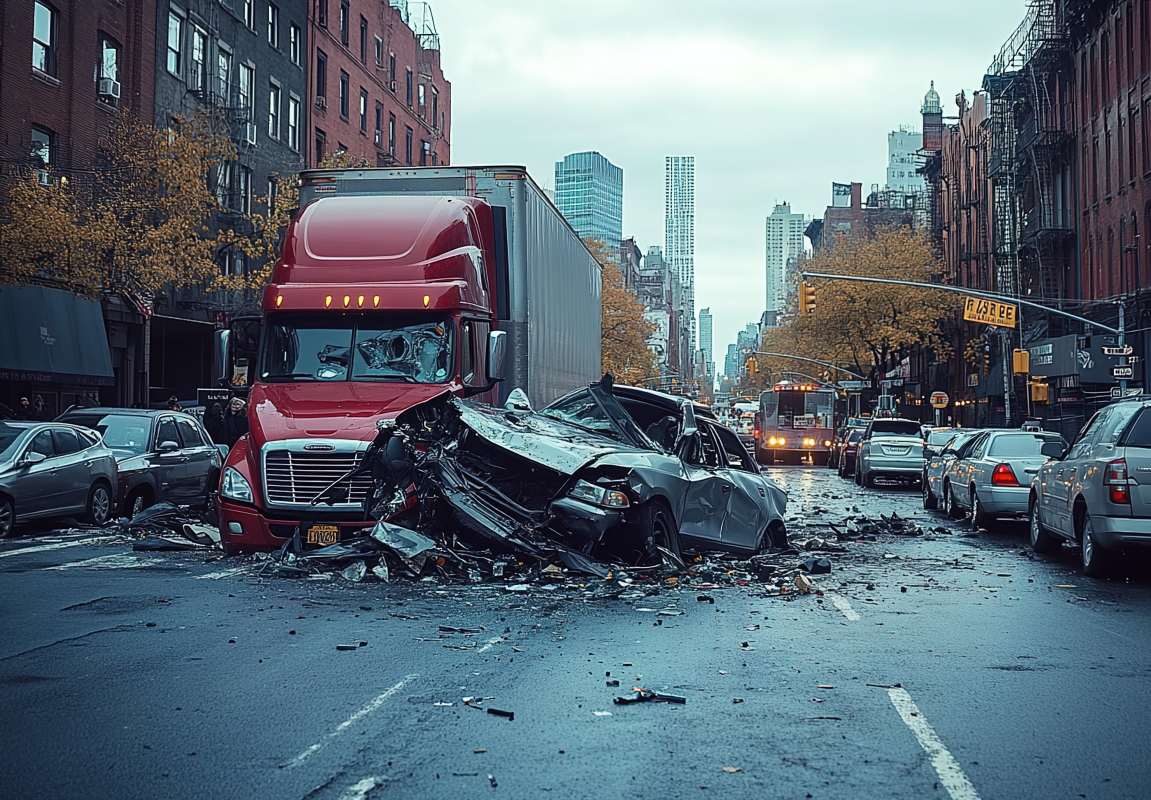
A collision involving a commercial vehicle is an inherently complex event. Unlike a standard car accident between two private citizens, these incidents can immediately raise questions of liability that extend far beyond the individual behind the wheel. When injuries occur, understanding who is legally and financially responsible is the critical first step toward securing appropriate compensation for medical bills, lost wages, and pain and suffering. The web of potential defendants can be intricate, often involving multiple layers of corporate entities and insurance policies.
Read on to learn who is liable for your injuries in a company truck accident.


The Doctrine of Respondeat Superior
In most company truck accident cases, the foundational legal principle is “respondeat superior,” a Latin term meaning “let the master answer.” This doctrine holds that an employer can be held vicariously liable for the negligent acts of an employee committed within the scope of their employment. Suppose a driver is making a delivery, traveling between job sites, or performing work-related duties during a crash. In that case, their employer will typically share liability for any resulting injuries. This is crucial because a corporate entity almost always possesses greater assets and higher insurance coverage limits than an individual driver.
Therefore, untangling this web and building a strong claim requires specific legal expertise. If you’re an injured victim in California or similar locations, it’s best to consult with a serious injury lawyer in California who possesses a deep understanding of both state traffic laws and the federal regulations governing commercial carriers.
Determining Employee Status
A key defense often raised by companies is that the driver wasn’t an employee but an independent contractor. This classification is frequently contested, as employers may use it to shield themselves from liability. Courts will look beyond the contract label to examine the working relationship’s reality. Some factors that indicate an employee relationship include:
- Behavioral Control: Does the company direct how, when, and where the driver works? Do they provide specific training or mandate routes and schedules?
- Financial Control: Does the company provide the truck, tools, and fuel? How is the driver paid? Are business expenses reimbursed?
- Relationship of the Parties: Are benefits provided? Is the work performed a key aspect of the company’s business? Is the relationship permanent?
If the evidence shows the company exerted significant control over the driver, they’ll likely be deemed an employer for liability purposes.
Direct Negligence of the Trucking Company
Beyond vicarious liability, a trucking company can be held directly negligent for its actions or failure to act. This involves proving the company breached a duty of care it owed to the public. Some common examples of direct corporate negligence include:
Negligent Hiring
This involves failing to properly screen drivers by checking driving records, criminal history, or previous employment. Hiring a driver with a history of DUIs or numerous traffic violations can demonstrate a failure to ensure public safety.
Negligent Retention or Supervision
This involves keeping drivers employed after becoming aware of their dangerous habits, such as repeated logbook violations or at-fault accidents.
Failure to Properly Maintain Vehicles
Neglecting mandatory repairs, ignoring pre-trip inspection reports, or failing to adhere to a rigorous maintenance schedule can lead to catastrophic mechanical failures, such as brake outages or tire blowouts.
Pressuring Drivers to Violate Regulations
Encouraging or requiring drivers to exceed federally mandated Hours-of-Service rules to make deliveries faster, leading to fatigued driving.
Liability of Third Parties

In some personal injury cases, parties other than the driver and their direct employer may share liability. A thorough investigation is required to explore all possibilities, which can include:
The Truck Owner
If the company leases a truck from an owner-operator or another company, the vehicle owner may bear some responsibility, especially if maintenance was their duty under the lease agreement.
Cargo Loaders
Improperly secured or overloaded cargo can significantly cause truck accidents, particularly rollovers. If a third-party logistics company loads the trailer, it may be liable for negligent loading.
Manufacturers
If a defective part, such as faulty brakes, tires, or a steering mechanism, caused or contributed to the accident, the truck manufacturer or the defective component could be held liable under product liability laws.
Government Entities
In rare cases, poor road design, missing signage, or unrepaired road hazards may contribute to an accident, potentially creating liability for a municipal or state government agency.
The Critical Role of Evidence and Investigation
Successfully proving liability may depend on the immediate preservation and analysis of evidence. Trucking companies and insurers have vast resources and begin their investigations immediately after a crash. Some key pieces of evidence that must be secured quickly include:
- The truck’s electronic logging device (ELD) data, which records driving time, speed, braking, and engine hours
- The driver’s logbooks and maintenance records
- The company’s safety and hiring records
- Data from the truck’s event data recorder
- GPS and satellite tracking information
- Testimony from other company drivers regarding practices and policies
The opposing party typically holds this evidence and can be destroyed or lost promptly if not formally requested through the legal discovery process.
Final Thoughts
Establishing liability in a company truck accident can be a complex legal challenge. It requires a comprehensive understanding of state and federal law, a meticulous approach to investigation, and the resources to challenge well-defended corporate entities. By keeping the information mentioned above in mind, you can identify all responsible parties, which is an essential step toward achieving full and fair compensation.