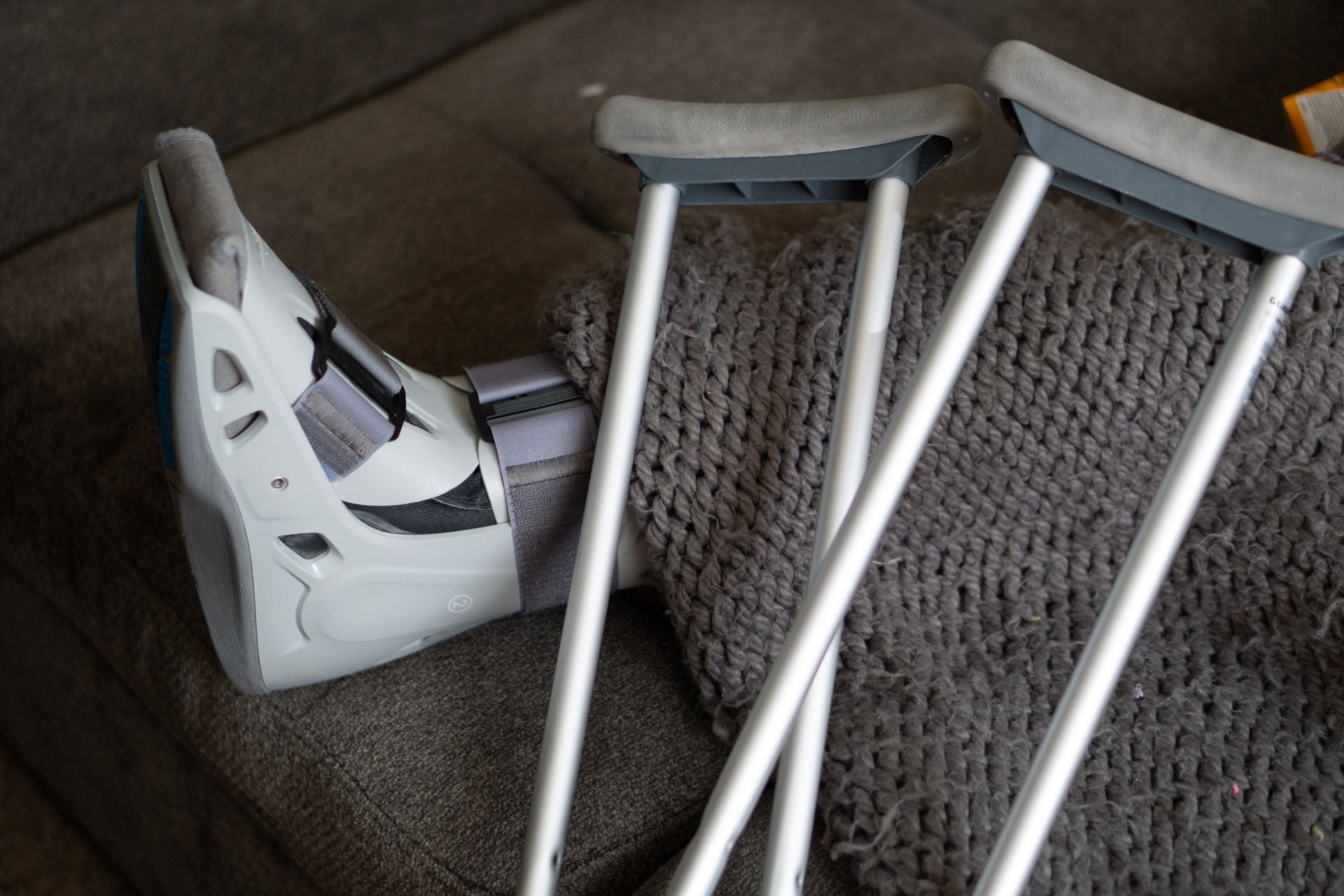
Sustaining an injury in an accident can be a disorienting experience. Amidst the pain and confusion, one of the most crucial things you can do to protect yourself is to gather and preserve evidence. Missing or incomplete evidence can significantly weaken your personal injury claim, making it harder to prove liability and recover compensation available under the law.
Strong evidence is the backbone of a successful personal injury case. A civil claim does not require proof of criminal guilt; it requires evidence establishing liability and demonstrating how the accident affected your life.
- Why Evidence Matters in Every Personal Injury Case
- The First Steps to Take Immediately After an Accident
- Photos and Videos That Strengthen Your Claim
- Medical Records: The Foundation of Injury Documentation
- Witness Statements and Why Timing Is Critical
- Digital Evidence You May Not Realize Is Valuable
- Mistakes That Can Weaken Your Personal Injury Case
- How Attorneys Use Evidence to Prove Negligence
- When Professional Investigations Become Necessary
- Why Acting Quickly Can Protect Both Your Rights and Your Evidence
- Frequently Asked Questions
Related Articles
-
 The Legal Process After a Personal Injury and How to Navigate It
-
When Should You Hire a Personal Injury Lawyer?
-
The Losses People Don’t Realize They Can Recover
-
What to Do After a Serious Car Crash
-
What to Look for When Choosing a Car Accident Lawyer
-
5 Best Personal Injury Law Firms in Nova Scotia, Canada with Prov…
-
How a Car Accident Lawyer Helps After a Crash
-
Legal Rights of Truck Accident Victims: A Comprehensive Guide
-
Personal Injury Claim Process Explained Step by Step
-
How a Car Accident Lawyer Guides You Forward
-
What Challenges Do Immigrants Face When Filing a Personal Injury…


Why Evidence Matters in Every Personal Injury Case
Most negligence-based personal injury claims require proof that the other party owed a duty of reasonable care, breached that duty, caused the injury, and produced legally recognized damages. California Civil Code section 1714, for example, states a general duty to use ordinary care, although each state controls the precise rules.
Other personal injury claims, including strict products liability and intentional tort claims, use different legal elements. Evidence allows you to prove the elements that apply. Without it, your claim may become your word against someone else’s, which can be difficult in court or negotiations with insurance companies.
Proving Negligence
Negligence generally means someone failed to use reasonable care under the circumstances. In Solomon v. City of New York, the New York Court of Appeals required duty, breach, and injury proximately resulting from the breach—commonly summarized as duty, breach, causation, and damages.
Evidence such as witness statements, accident reports, and traffic camera footage can help show how the other party’s actions or inactions led to the incident. For example, if a driver was texting, a witness’s testimony or properly obtained cell phone records could help demonstrate that conduct.
Demonstrating Causation
It is not enough to show that someone was negligent; you also need to prove that the negligence caused your injuries. Medical records are important because they document symptoms, diagnoses, reported history, and treatment and may support a connection between the accident and your condition.
They do not automatically establish legal causation. If there is a significant gap between the accident and your first medical visit, or if your history shows pre-existing conditions, the other side may argue that the accident did not cause all claimed injuries.
Quantifying Damages
Beyond the immediate pain, personal injuries can lead to significant financial burdens, including medical bills, lost wages, and future care costs. Evidence like invoices, pay stubs, and expert testimony from economists or vocational rehabilitation specialists helps to quantify these damages and document the financial impact of the accident. It helps place a concrete value on what you have lost.
The First Steps to Take Immediately After an Accident
What you do in the moments and hours following an accident can be important for your future claim. While your immediate priority should be your safety and well-being, keep these practical steps in mind.
Prioritizing Safety and Medical Attention
First, move to a safe location if possible and check for injuries. Even if you feel fine, consider seeking medical attention promptly. Adrenaline can mask pain, and some injuries, like whiplash or internal bleeding, may not be immediately apparent. A prompt medical examination creates a contemporaneous record of your symptoms and treatment that may help support the connection to the accident.
Contacting Law Enforcement
For car accidents, and sometimes other incidents, contact the police or appropriate authorities when required or reasonably necessary. An accident report can provide a contemporaneous record of the location, time, parties, observations, and statements collected by the officer. It does not automatically establish fault or guarantee that every part will be admissible. Federal Rule of Evidence 803(8), for example, permits certain public records only when its conditions are satisfied, and state evidence rules may differ.
Exchanging Information
If you can, safely exchange information with all other parties involved. This includes names, contact details, insurance information, and vehicle license plate numbers for car accidents. This information helps your attorney identify and contact relevant individuals and entities later. Do not argue about fault at the scene; collect the facts.
Photos and Videos That Strengthen Your Claim
In today’s world, most people have a camera in their pocket. Using it effectively after an accident can provide useful visual evidence.
Documenting the Accident Scene
Take photos and videos of the overall scene and important details. Start with wide shots showing landmarks and street names if applicable. Then photograph vehicle damage from multiple angles, skid marks, debris, shattered glass, and nearby traffic signs or signals. For a slip and fall, capture the hazard, surrounding area, and any warning signs or lack of warnings.
Preserve damaged clothing, footwear, vehicle components, defective products, and other physical items in their post-accident condition; do not clean, repair, alter, or discard them before they are documented.
Capturing Your Injuries
Document visible injuries. Take clear photos of cuts, bruises, swelling, or other marks after the accident and continue as they heal or worsen. This visual progression can help show the severity and duration of your injuries.
Environmental Factors and Conditions
Consider capturing environmental factors. Was it raining? Was there ice? Was an obstruction blocking vision? These details can play a role in determining fault and may be overlooked if not documented promptly.
Medical Records: The Foundation of Injury Documentation
Medical records are often among the most important pieces of evidence in a personal injury claim. They document the injury and treatment from a professional perspective.
Comprehensive Treatment History
Attend appointments, follow reasonable medical advice, and keep records of every visit, diagnosis, treatment, and medication. Each doctor’s note, therapy record, and prescription refill builds a history of your injury and recovery. Gaps in treatment may be used to question severity or causation, so keep documentation explaining any gap caused by cost, scheduling, transportation, delayed symptoms, or medical advice.
Diagnostic Imaging and Test Results
X-rays, MRIs, CT scans, and other diagnostic tests can provide objective medical evidence of internal conditions. Preserve the reports and images. The cause, age, and significance of a finding may still require medical interpretation and may be disputed.
Prognosis and Future Care
It is not just about what has happened, but what may happen. Your doctors’ prognoses, including anticipated recovery times, potential permanent impairment, and recommendations for future care, can help calculate future medical expenses and long-term damages. This may include physical therapy, specialist consultations, or at-home care.
Witness Statements and Why Timing Is Critical
Witnesses may provide independent accounts that support your claim. Their observations can corroborate your account or address conflicting narratives.
Identifying and Contacting Witnesses
If people saw the accident, try to get their names and contact information at the scene. They may be pedestrians, other drivers, or passengers. Do not assume they will remain at the scene.
Documenting Their Accounts
Ideally, your attorney will speak with witnesses directly. If appropriate, ask for a brief written statement describing what they saw, heard, and the sequence of events. Avoid leading questions or asking them to speculate about legal fault. Before recording a conversation, obtain consent and check applicable state law.
California Penal Code section 632, for example, generally prohibits recording confidential communications without all parties’ consent, while other states use different rules. Memories may become less reliable over time.
Digital Evidence You May Not Realize Is Valuable
Digital evidence can emerge from online accounts and electronic devices.
Communications and Online Activity
Text messages, emails, or social media posts sent or received around the time of the accident may contain useful information. For example, a text to a friend describing symptoms or an email from an employer discussing missed work may help document timing and impact.
Be careful about posting after an accident because opposing parties may seek content that conflicts with your claim. Keep original files, preserve metadata, avoid editing or deleting relevant material, and create secure backups. Federal Rule of Evidence 901 illustrates why this matters: evidence generally must be supported as being what the offering party claims it is.
Dash Cam and Surveillance Footage
Vehicles, businesses, and homes may have dash-camera or surveillance footage. If the accident occurred near a camera, identify the owner and request preservation promptly because footage may be overwritten. A written preservation request, subpoena, or other legal process may be needed when a third party controls the recording.
Wearable Device Data
Fitness trackers and smartwatches collect activity, heart-rate, and sleep data. When relevant and properly authenticated, changes in this data may help illustrate the effect of an injury on daily activity, although the meaning of the data may be disputed.
Mistakes That Can Weaken Your Personal Injury Case
While gathering evidence is important, avoiding common pitfalls can also protect your claim.
Admitting Fault or Apologizing
Avoid arguing about fault, speculating, or making unnecessary admissions at the scene. Give truthful factual information to police, medical providers, and your own insurer when required. The effect of shared fault varies by state. New York Civil Practice Law and Rules section 1411 generally reduces damages according to the claimant’s share of fault. In Williams v. Harrison, the Supreme Court of Virginia held that a plaintiff’s negligence that proximately causes the accident bars recovery.
Delaying Medical Treatment
An unexplained delay in medical attention can create questions about the cause and severity of your injuries. Seek appropriate care promptly and keep records explaining any unavoidable delay.
Speaking Directly with Insurance Companies
The other party’s liability insurer represents its insured and may seek to limit the amount it pays. Before giving that insurer a recorded statement or signing documents, consider obtaining legal advice. Your own insurer is different: your policy may require prompt notice, truthful information, and cooperation. The California Department of Insurance, for example, advises that an auto policy requires cooperation, but the exact duties depend on the policy and governing state law.
How Attorneys Use Evidence to Prove Negligence
An experienced personal injury attorney organizes the evidence into a narrative addressing liability and damages.
Building a Strong Narrative
Attorneys take police reports, medical records, witness statements, photographs, and other evidence and use them to explain what happened, who may be legally responsible, and how the accident affected the claimant. They identify discrepancies, highlight key facts, and present the information to insurance adjusters, opposing counsel, or a jury.
Expert Testimony
Sometimes, an attorney will use expert witnesses. Accident reconstructionists can analyze scene evidence to explain how an accident occurred. Medical experts can clarify the nature, cause, and long-term impact of injuries. Economic experts can project future lost wages and medical costs. Expert testimony may help explain technical matters and support disputed conclusions.
When Professional Investigations Become Necessary
There are times when the evidence you can gather on your own is not enough or the circumstances are complex.
Complex Accidents or Disputed Liability
In multi-vehicle collisions, commercial-vehicle crashes, or incidents where liability is heavily disputed, a professional investigation may be important. Legal representation in accident cases may be especially important when multiple parties could be responsible or relevant evidence is controlled by a trucking company. This could involve analysis of vehicle event data, reconstruction of the scene, or review of company safety records
Access to cell phone records, vehicle data, employment records, or company files may require authorization, a preservation request, or formal discovery. Federal Rule of Civil Procedure 45 permits federal subpoenas for documents, electronically stored information, and tangible things.
Missing or Uncooperative Witnesses
If key witnesses are difficult to locate or unwilling to cooperate, a licensed private investigator may be able to locate them and request their participation. A witness generally cannot be forced to provide an informal statement, although formal legal process may be available after litigation begins.
Why Acting Quickly Can Protect Both Your Rights and Your Evidence
Time can be critical in personal injury cases. Prompt action may improve the ability to preserve evidence and comply with legal deadlines.
Preserving Fleeting Evidence
Accident scenes change, skid marks fade, surveillance footage may be overwritten, and memories can become less reliable. Delay increases the risk that relevant evidence will disappear or become harder to obtain. Prompt documentation and preservation requests improve the chance of securing available evidence.
Meeting Deadlines and Statutes of Limitations
Each state has statutes of limitations that set filing deadlines, but there is no single nationwide deadline. New York Civil Practice Law and Rules section 214 generally provides three years for many personal injury actions, while Texas Civil Practice and Remedies Code section 16.003 generally provides two years.
The correct period can depend on the state, claim, defendant, accrual date, tolling rules, and exceptions. Other deadlines may arise earlier: California Government Code section 911.2, for example, generally requires certain personal injury claims against public entities to be presented within six months. Insurance policies and specialized claims may also impose prompt notice requirements.
Missing an applicable deadline can bar a claim, so the governing rules should be checked immediately. By understanding the importance of evidence and taking practical steps to preserve it, you improve your ability to present a supported personal injury claim. This approach helps protect your rights and document the accident’s effect on your life.
Frequently Asked Questions
What evidence should I preserve after an accident?
Preserve photographs and videos of the scene, visible injuries, damaged property, environmental conditions, medical records, witness contact information, insurance information, communications, surveillance footage, and relevant digital data. Keep original files and avoid altering, cleaning, repairing, or discarding physical evidence before it is documented.
Why are medical records important in a personal injury claim?
Medical records document your symptoms, diagnoses, treatment, and reported history. They can support the connection between the accident and your injuries, although they do not automatically prove legal causation.
Can I record a witness statement after an accident?
You should obtain the witness’s consent and check the law of the applicable state before recording. Recording-consent requirements vary, and some states generally require everyone involved in a confidential communication to consent.
Should I give a recorded statement to an insurance company?
Consider obtaining legal advice before giving a recorded statement to another party’s liability insurer. Your own insurer is different because your policy may require prompt notice, truthful information, and cooperation.
How long do I have to file a personal injury claim?
There is no single nationwide deadline. The applicable statute of limitations depends on the state, type of claim, defendant, accrual date, tolling rules, and possible exceptions. Government claims, insurance policies, and specialized claims may also impose earlier notice requirements.