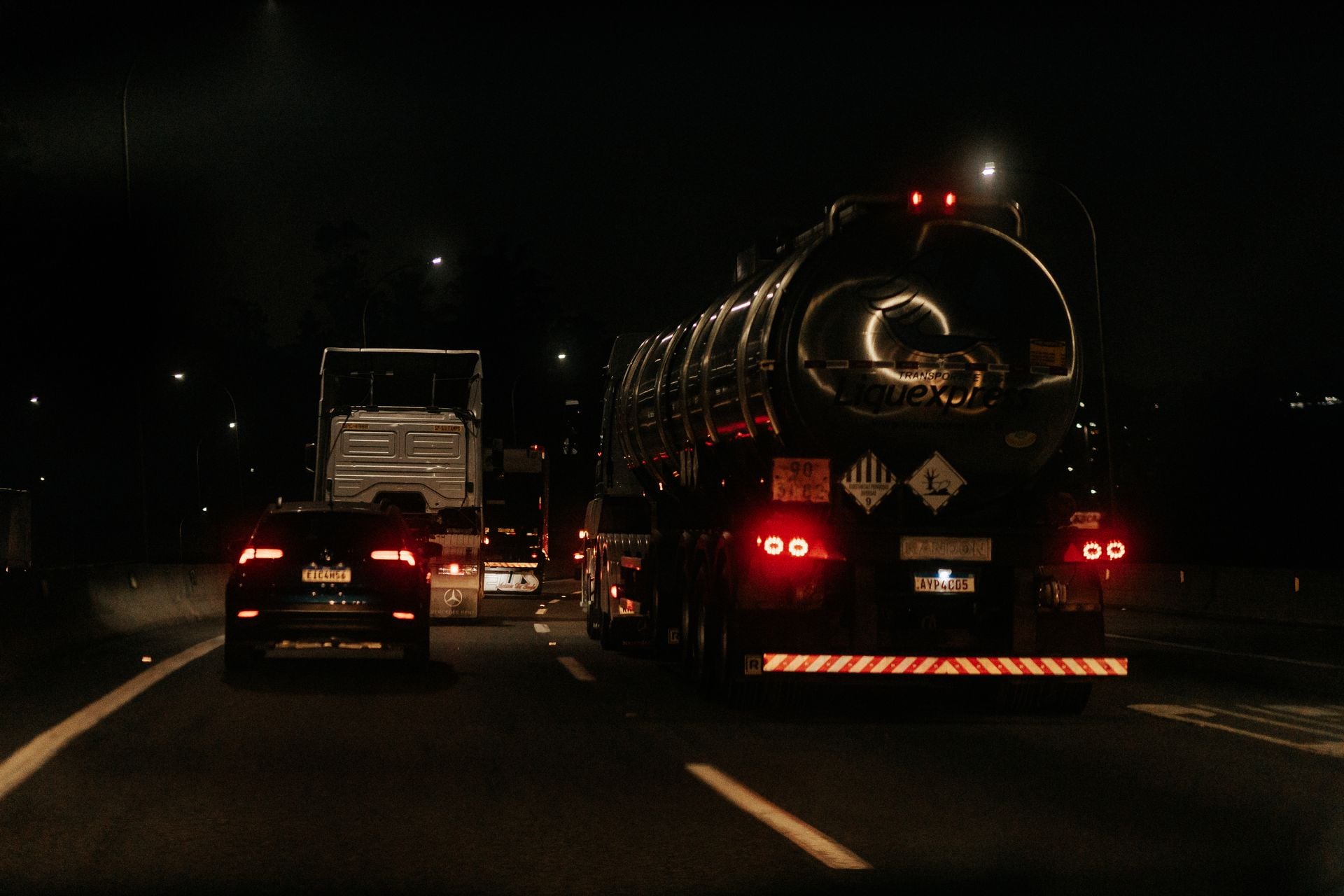
Most people think about size when considering the difference between a car accident and a truck accident. A fully loaded commercial tractor-trailer can weigh up to 80,000 pounds. In contrast, a passenger vehicle weighs between 3,000 and 5,000 pounds. This weight disparity alone explains why truck accidents result in catastrophic injuries at a rate that ordinary vehicle collisions do not approach.
However, size is only one factor that makes truck accident claims different. The legal complexity of pursuing compensation after a serious commercial vehicle crash far exceeds the physical scale of the vehicles involved. The regulatory framework, the number of potentially liable parties, the evidence that must be preserved, and the defense infrastructure that responds to these claims are all sophisticated processes that standard car accident claims do not encounter.
A truck accident victim who approaches their claim the same way they would a rear-end collision with another driver is likely to miss critical evidence, misidentify those responsible, and underestimate the resources the other side is bringing to the table.
- Federal Regulations Create a Separate Legal Framework
- Multiple Defendants With Competing Interests
- Evidence That Disappears Faster Than in Car Accidents
- The Defense Infrastructure Is More Organized
- Insurance Coverage Is More Complex
- What This Means Practically for Injured People
- Frequently Asked Questions
Related Articles
-
 Who’s Liable and How to Seek Compensation for Dump Truck Ac…
-
How Truck Accident Lawyers Stand Up for Victims after a Crash
-
How to Prove Fault in a Truck Accident Case
-
How Truck Driver Employment Status Affects Legal Claims
-
Essential Steps to Take Following a Truck Accident
-
Common Reasons Why Truck Accidents Happen
-
What to consider when in an accident with a truck


Federal Regulations Create a Separate Legal Framework
In Florida, car accidents are almost entirely governed by state law, specifically the state’s traffic statutes, negligence standards, and insurance requirements. However, truck accidents are different. Commercial vehicles operating on Florida’s interstate highway system, including I-75, I-4, and I-95, are subject to federal regulations administered by the Federal Motor Carrier Safety Administration (FMCSA).
These regulations govern virtually every aspect of commercial trucking operations relevant to accident causation, including:
● How many consecutive hours a driver may operate before a mandatory rest period
● How frequently vehicles must be inspected
● How cargo must be secured, what weight limits apply
● What substance testing requirements drivers must satisfy
● What documentation carriers must maintain for each driver and vehicle
If an FMCSA regulation is violated before or during a crash, the violation is considered evidence of negligence. Identifying and establishing the violation requires knowing where to look, which records to request, and how to interpret the regulatory framework that most drivers have never encountered.
This is a meaningful practical distinction. An attorney handling a truck accident claim must work with driver qualification files, electronic logging device records, vehicle inspection and maintenance logs, cargo manifest documentation, and the carrier’s FMCSA compliance history.
Multiple Defendants With Competing Interests
Truck accident cases typically involve several defendants with different interests and liability exposure based on their role in the accident.
Consider the following scenario, which is common on Florida’s Gulf Coast highway corridors: A commercial truck drifts into another lane and causes a serious collision. At first glance, it appears to be a case of driver error. However, an investigation may reveal that the driver was operating beyond federally permitted hours due to pressure from the carrier to meet delivery schedules. The trailer involved belonged to a leasing company, not the carrier. The brakes that contributed to the lane drift had been flagged in a maintenance inspection three weeks earlier but were not repaired. The cargo that shifted during the maneuver had been loaded by a third-party logistics company.
In this case, the at-fault driver, motor carrier, trailer leasing company, maintenance contractor, and cargo loading company may all be held legally responsible. Each entity has its own legal representation and insurance. Each entity has an incentive to shift responsibility to one of the others. Managing this complexity, identifying every liable party, and ensuring they are all included in the legal action before any deadlines pass requires a systematic approach that standard personal injury practices may lack. A truck accident lawyer can help with this legal process. If you are injured in a car accident, contact a lawyer as soon as possible.
Evidence That Disappears Faster Than in Car Accidents
Prompt evidence preservation benefits both car and truck accident claims. However, truck accidents generate a specific type of electronic evidence that is only available for a short time and does not exist in ordinary car accident cases.
Commercial trucks are required to maintain electronic logging devices that record hours-of-service data. These devices often contain:
- Event data recorders that capture vehicle speed, brake application, throttle position, and steering input in the seconds before a collision.
- Dash cams and forward-facing camera systems capture footage of the road ahead.
- GPS and fleet tracking systems document the vehicle’s route, speed, and stop history.
All of this data is time-sensitive. Electronic logging device records may be overwritten within weeks, event data recorder information can be lost when the vehicle is repaired, and dashcam footage may be overwritten in days. The mechanism for preventing this evidence from disappearing is a formal legal preservation demand sent to the carrier and all related entities at the earliest stage of legal representation. Without it, some of the most important evidence in a truck accident case could disappear before an investigation even begins.
This is fundamentally different from a car accident case, in which surveillance footage from nearby businesses is usually the most time-sensitive evidence. In truck accident cases, however, the vehicle itself carries critical evidence that disappears on a timeline controlled by the carrier. A car accident attorney can help you recognize these differences and approach your case properly.
The Defense Infrastructure Is More Organized
When a serious car accident occurs, the at-fault driver’s insurance company assigns a claims adjuster. If the matter moves toward litigation, the company will eventually assign defense counsel as well.
When a serious commercial truck accident occurs, many large carriers activate a more immediate response. These teams may arrive at the crash scene and document the scene from the carrier’s perspective, interview the driver, secure the vehicle’s electronic data, and begin building a factual record favorable to the defense before the injured party has legal representation.
Although an injured person who waits days or weeks to consult an attorney after a car accident may lose some evidence and leverage, the claim often remains viable. However, after a truck accident, an injured person who waits the same amount of time may find that the most important electronic evidence has been overwritten, the scene has been reconstructed in the carrier’s favor, and the most useful witnesses have already been interviewed by the defense team. If you’re unsure how to proceed in this situation, a truck accident lawyer can help you navigate the legal landscape and pursue the compensation you deserve.
Insurance Coverage Is More Complex
In Florida, private passenger vehicles are required to carry $10,000 in personal injury protection and $10,000 in property damage liability. Commercial trucks operating in interstate commerce must carry significantly higher minimum liability limits under federal law, ranging from $750,000 to $5,000,000 depending on the type of cargo. Those carrying hazardous materials face the highest minimums.
Higher coverage limits mean higher potential recovery in serious injury cases, and also that insurance companies defending these claims have more at stake and dedicate more resources to minimizing what they pay. Commercial truck insurers defending high-value claims have typically handled many similar cases and have established defense strategies, expert witnesses, and litigation approaches specifically designed for commercial vehicle liability.
Additionally, the presence of multiple defendants in many truck accident cases means that multiple insurance policies from different carriers may be involved, each with different coverage limits and terms. Identifying and pursuing all applicable coverage sources is part of the legal work that is absent from a single-defendant car accident claim. Contact a car accident attorney to assist you in this potentially complex process.
What This Means Practically for Injured People
None of this is to suggest that truck accident claims can’t be won or that they’re not worth pursuing because of their complexity. Higher injury severity, higher insurance coverage limits, and a federal regulatory framework that creates documented evidence of carrier wrongdoing often make truck accident claims some of the most significant personal injury cases a Florida attorney will handle.
However, the approach required for a truck accident claim differs significantly from that required for a car accident claim, affecting the outcome. It also requires specific technical knowledge about commercial trucking operations that the average personal injury practice may not have developed.
If you or someone you know has been seriously injured in a commercial truck accident in Florida, the single most important step toward protecting the full value of the claim is consulting with a truck accident lawyer who has specific experience in commercial vehicle litigation rather than general personal injury practice.
Frequently Asked Questions
How long do I have to file a claim for a truck accident in Florida?
According to Florida Statute Section 95.11, the statute of limitations for personal injury claims, including commercial truck accidents, is two years from the date of the crash. However, critical electronic evidence from commercial vehicles may be overwritten within days or weeks.
Can I sue the trucking company directly, not just the driver?
Yes. The motor carrier that employed or contracted the driver is usually responsible for the driver’s actions and for its own hiring, training, and compliance failures.
What is an electronic logging device (ELD), and why does it matter to my case?
An ELD is a federally mandated device installed in commercial trucks that records hours-of-service data, including how long the driver has been operating the vehicle and whether they complied with federal rest requirements. In crashes where driver fatigue is a factor, ELD data can directly prove a federal hours-of-service violation, which is powerful evidence of carrier negligence.
This article is intended for general informational and educational purposes only and does not constitute legal advice. Florida law varies by jurisdiction and individual circumstances. Readers should consult a qualified Florida attorney for advice specific to their situation.

Author Bio: Joshua Dannheisser is a driven and passionate trial attorney who brings a single-minded focus to achieve the very best outcome for every client. He provides personalized service to every client and his drive, background and dedication make him the relentless litigator who goes the extra mile for those he represents.
Website: https://dannheisserinjurylaw.com/
Email:josh@pdfattorneys.com