
Cryptocurrency may look like digital money, but under U.S. tax law, assets such as Bitcoin and Ethereum are treated as property.
Beginning in January 2025, the crypto tax landscape will undergo major changes. U.S. exchanges will be required to track and report all transactions on the new Form 1099-DA, designed specifically for digital assets. The duration of your crypto holdings also plays a crucial role in how you are taxed. Assets held for one year or less fall under short-term capital gains, taxed at regular income rates between 10 and 37 percent. Those held longer than a year qualify for lower long-term rates of 0, 15, or 20 percent, depending on income level.
The consequences of noncompliance can be severe. The IRS has increased enforcement efforts against crypto tax evasion, and inaccurate reporting can lead to audits, significant penalties, or even criminal charges.
Unlike countries that prohibit crypto payments, the United States allows employers to issue wages in stablecoins with employee consent and proper tax reporting. However, because the IRS classifies stablecoins as property, taxpayers face additional recordkeeping and reporting requirements.
This guide explains how to file your 2025 crypto taxes correctly, step by step. You’ll also find clear examples to make the process easier to follow and ensure you remain compliant with the latest IRS updates.


Key IRS Changes for Crypto Taxes in 2025
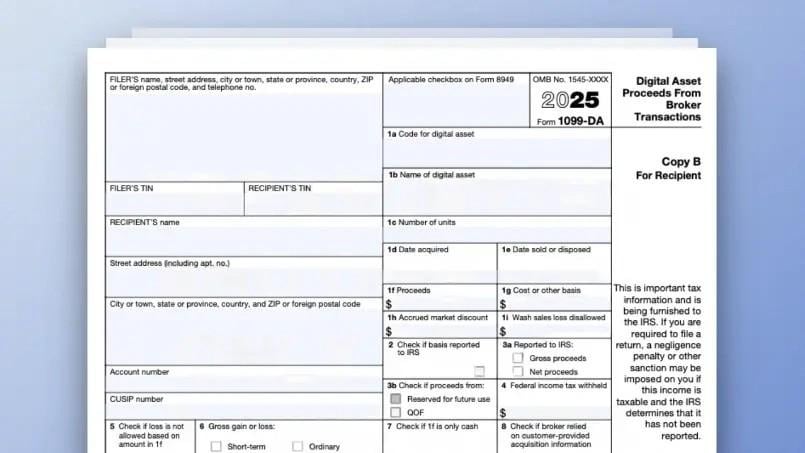
Image Source: Bitwave
The IRS will implement major changes to cryptocurrency taxation starting January 1, 2025. These updates substantially change how digital assets are reported and tracked. Both crypto brokers and investors will face new obligations under these rules.
New Form 1099-DA and what it means
Cryptocurrency exchanges and brokers must report your digital asset transactions to the IRS using Form 1099-DA from January 1, 2025. This new form creates the first detailed reporting framework specifically designed for cryptocurrency.
Your crypto sales’ gross proceeds will be reported on Form 1099-DA for tax year 2025. Brokers will also need to include cost basis information from January 1, 2026, which helps determine capital gains or losses.
The reporting system works just like stock transactions. The IRS receives a copy while you get one for your tax records, creating a new level of accountability for crypto investors.
Wallet-by-wallet accounting rules
Taxpayers must stop using the universal accounting method previously allowed for calculating cost basis from January 1, 2025. Each wallet or exchange account now requires separate cost basis tracking.
Your crypto transfers between wallets must be tracked accurately. While transfers themselves don’t trigger taxes, undocumented transfers break cost basis continuity and could inflate your taxable gains.
Revenue Procedure 2024-28 offers taxpayers a safe harbor to reasonably allocate unused basis of digital assets held within each wallet as of January 1, 2025. You can pick either the specific unit basis method or the global basis method, but your chosen allocation method becomes permanent.
Updated IRS reporting thresholds
Tax forms now include a digital assets question that requires all taxpayers to report their involvement in digital asset transactions. Inaccurate answers could lead to audits and penalties.
The IRS has deepened their commitment to enforcement. Thousands of crypto investors have received IRS letters as enforcement grows. These changes line up cryptocurrency transactions with traditional financial assets and want to close the tax gap on unreported crypto activity.
Understanding How Crypto Is Taxed
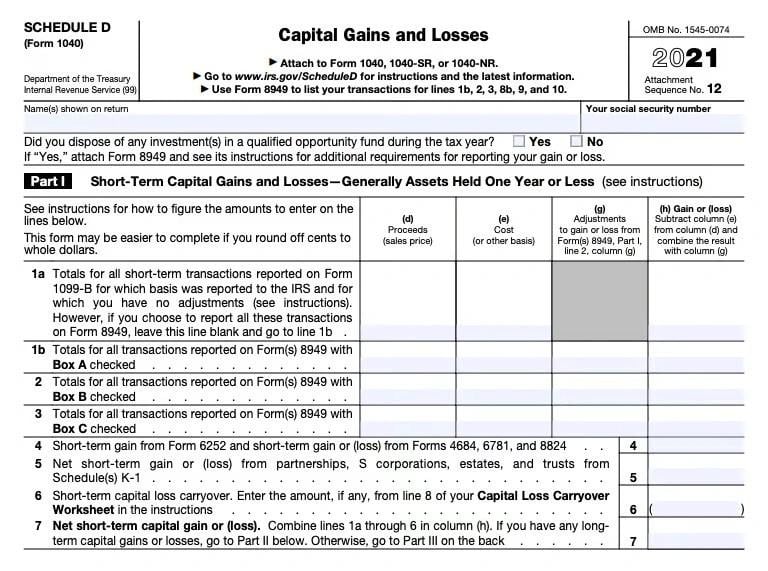
Image Source: Utah Accounting, Tax, Financial Blog
The IRS treats cryptocurrency as property, not currency. This creates a special tax framework that affects digital asset owners. Let’s get into how this affects your tax obligations.
Capital gains vs. income tax
Crypto taxpayers need to know the difference between capital gains and income tax. The IRS taxes cryptocurrency in two main ways:
- Capital gains tax kicks in when you sell, trade, or get rid of cryptocurrency. This happens when you sell crypto for USD, swap one crypto for another, or buy things with crypto.
- Ordinary income tax applies to crypto you earn through mining, staking, airdrops, or as payment. The tax is based on what your crypto is worth when you get it.
Short-term vs. long-term gains
Your tax rate depends on how long you keep your crypto before selling:
- Short-term capital gains: You’ll pay your regular income tax rate if you hold crypto for a year or less (10%-37% based on what you make).
- Long-term capital gains: Lower rates apply when you hold crypto longer than a year (0%, 15%, or 20% based on income).
This tax difference is a great reason to hold onto your assets longer, since long-term rates are nowhere near as high.
How staking, mining, and airdrops are taxed
Each way of earning crypto comes with its own tax rules:
The IRS taxes mining income as regular income based on what the crypto is worth when you receive it. Miners running a business need to report on Schedule C and pay self-employment tax.
Staking rewards become taxable income once you have “dominion and control” over them. On top of that, airdrops after hard forks count as regular income based on their value when you get them.
Why accurate recordkeeping required specialized software
Crypto transactions need detailed records. You must track these details for each transaction:
- Date and time
- Fair market value in USD
- Cost basis
- Type of transaction
Because managing these records manually can be complex and time-consuming, many investors and businesses rely on the best crypto accounting software to simplify the process. These tools automatically import transactions from multiple wallets and exchanges, calculate gains and losses accurately, and generate reports that align with IRS requirements.
How to File Crypto Taxes Step-by-Step
Filing taxes on cryptocurrency may seem complicated, but following a structured process helps ensure accuracy and compliance. Here are the key steps to complete your crypto tax filing correctly:
- 1) Gather your transaction history
Collect records from all exchanges, wallets, and platforms you used during the tax year. Include details such as transaction dates, types of cryptocurrency, amounts, and U.S. dollar values at the time of each transaction. Most exchanges allow you to download this information as CSV files. - 2) Calculate gains and losses
Determine your cost basis (the amount you originally paid) and subtract it from the proceeds you received. For crypto earned through mining or staking, the cost basis equals its market value on the day it was received. Assets held for more than one year qualify for lower long-term capital gains rates, while those held for less than a year are taxed at ordinary income rates. - 3) Complete IRS Form 8949 and Schedule D
Record all crypto disposals on Form 8949, separating short-term transactions in Part I and long-term in Part II. Each entry should include a description of the asset, purchase and sale dates, proceeds, cost basis, and resulting gain or loss. Transfer the totals from Form 8949 to Schedule D to calculate overall capital gains or losses. - 4) Report income on the appropriate forms
Crypto income from activities such as mining, staking, and airdrops must be reported on the correct IRS forms. Use Schedule 1 for general crypto income and Schedule C if you operate as self-employed. Mining income may also require Schedule SE to account for self-employment tax. - 5) File state taxes if applicable
If your state collects income tax, you will likely need to report your crypto transactions at the state level as well. Most states follow federal IRS guidelines but may have different reporting thresholds or forms. Always review your state’s specific requirements before filing.
Common Mistakes and How to Avoid Them
Getting your crypto tax return wrong can become costly, so it is important to understand what often draws the IRS’s attention. Here are some of the most frequent mistakes taxpayers make and how to avoid them:
- Misreporting self-transfers
Moving cryptocurrency between your own wallets is not a taxable event, but it must be properly documented. Without accurate records, the IRS may interpret these transfers as sales and impose capital gains tax. For example, if you move 5 ETH between exchanges and one shuts down, missing documentation could make the transfer appear taxable. - Forgetting to include staking rewards
Staking rewards are subject to ordinary income tax once you gain control over them. The IRS defines this moment as when you are free to withdraw or trade the assets. Most exchanges issue Form 1099-MISC for staking income, making unreported rewards easy to detect. Remember that staking creates two taxable events: income when the rewards are received and capital gain or loss when they are sold. - Using incorrect cost basis methods
Taxpayers can currently select different cost basis methods, such as FIFO, LIFO, or HIFO, but the IRS will make FIFO mandatory beginning in 2026. Inconsistent changes between methods can raise red flags. Your chosen method significantly affects reported gains and losses, so apply it consistently across tax years. - Not reporting losses to offset gains
Many taxpayers miss valuable deductions by failing to report crypto losses. You can use capital losses to offset capital gains and deduct up to $3,000 from ordinary income each year. Losses exceeding that limit can carry forward to future years. Detailed documentation is essential to claim these benefits and avoid paying more tax than necessary.
Staying Ahead of the Curve in 2025
As digital assets continue to integrate into mainstream finance, the IRS is reshaping how cryptocurrency activity is tracked and taxed. Every investor and business should approach reporting with precision and awareness. The introduction of Form 1099-DA, wallet-specific accounting rules, and heightened enforcement all signal a new era of transparency and accountability.
Success in this environment depends on preparation. Consistent recordkeeping, timely updates on regulation changes, and the use of reliable accounting tools help ensure filings remain compliant and accurate.
The 2025 tax season represents more than another reporting cycle—it reflects a broader shift in how digital assets fit within the legal and financial system. Staying informed and organized now will make compliance easier and protect you as crypto oversight continues to evolve.